
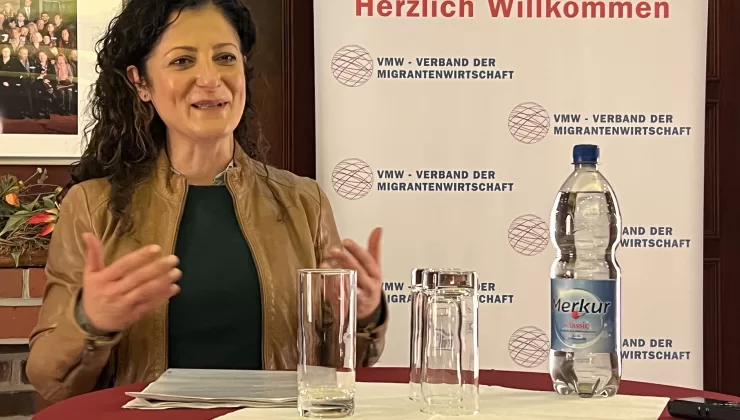
The Berlin Senate has signed off on an important decision affecting thousands of people working in the private security sector. Senator Cansel Kızıltepe declared the collective wage agreement prepared for private security services in the states of Berlin and Brandenburg to be generally binding retroactively from January 1, 2026. Thus, minimum wage standards have become a legal requirement for all employers and employees operating in the sector.
Berlin Senator for Labor, Social Affairs, Equality, Integration, Diversity, and Anti-Discrimination Cansel Kızıltepe approved the decision to make the collective wage agreement covering the private security sector generally binding. The decision legally came into force upon its publication in the Federal Gazette (Bundesanzeiger) on July 2, 2026.
Approximately 10,000 More Employees Covered by Collective Agreement
Thanks to the new regulation, approximately 10,000 private security employees who were not previously subject to a collective bargaining agreement will now benefit from the same wage and working conditions as other employees in the sector.
The generally binding decision covers all employees providing security, control, and order services on behalf of third parties in Berlin and Brandenburg. Furthermore, educational institutions and training centers providing vocational training for the security sector have also been included in the scope of the agreement.
However, DB Netz AG's railway security services, cash and valuables transport, cash processing services, and security practices under the Air Security Act were excluded from this regulation.
Hourly Wages to Rise Up to 22.65 Euros
According to the collective agreement, the new wage scale to be applied in the private security sector has been determined as follows:
Effective January 1, 2026
- Hourly wages will range between 15.15 Euros and 21.80 Euros.
- Monthly salaries will vary between 2,672 Euros and 3,662 Euros.
Effective January 1, 2027
- Hourly wages will increase to between 15.70 Euros and 22.65 Euros.
- Monthly salaries will be applied between 2,772 Euros and 3,805 Euros.
In addition to the determined wages, various bonuses and additional payments will be added based on the type of duty.
"Wage Dumping Will Be Prevented"
It was stated that the decision was made in line with the recommendation of the Berlin State Tariff Commission on May 18, 2026.
Senator Cansel Kızıltepe made the following statements regarding the regulation:
"Now, approximately 10,000 private security employees in Berlin will also receive the same wages as those covered by the collective agreement. Thanks to the generally binding decision, equal wage standards will be ensured for all companies and employees operating in the sector. This implementation will secure fair working conditions, prevent wage dumping, and curb unfair competition in public tenders."
Mandatory for All Employers
With the generally binding decision, it will no longer be possible for any employer in the private security sector to pay below the wages stipulated in the collective agreement. Thus, the aim is to establish a common wage standard in the sector, protecting employees' rights and ensuring fair competition.
The collective bargaining agreement can be reviewed via the Joint Collective Agreement Register (Gemeinsames Tarifregister Berlin-Brandenburg) within the Berlin Senate. Employees can also obtain information about the agreement by phone.



Comments
0 commentsNo comments on this article yet. Be the first!