
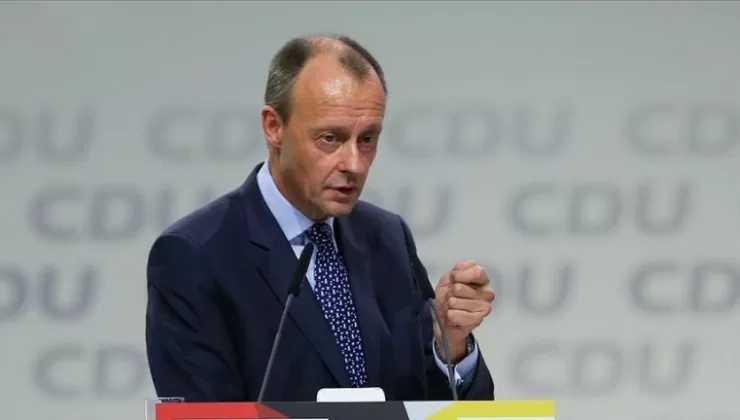
German Chancellor Friedrich Merz signaled a tax cut to relieve citizens due to the sharp increase in fuel prices. Merz said that "various taxes and fees need to be reviewed" as a solution. The CDU Chancellor Merz stated in a statement he made on Tuesday in Berlin that the government has "multiple options." Merz said, "We will discuss this issue within the coalition and I hope we reach a solution soon."
Economy Minister Katherina Reiche (CDU) had proposed direct payments to low-income citizens. Regarding this proposal, Merz noted that a payment mechanism had been discussed within the coalition a long time ago. He stated that the Ministry of Finance is "working on" this issue and hopes for its completion as soon as possible. Merz added, "Meanwhile, we also need to discuss other possibilities."
Chancellor Merz once again clearly opposed the "excess profits tax" demanded by the SPD. Merz said, "Currently, I do not see sufficient factual and legal grounds for taxing so-called excess profits." As a justification, he stated, "We can only tax companies that have ownership in Germany." He emphasized that there are many refineries in Germany and these refineries are under serious economic pressure. Merz added, "Instead of taxing them additionally, we should have a strong interest in keeping refineries in Germany."
Finance Minister Lars Klingbeil (SPD), on the other hand, insists on an excess profits tax at the European Union level. Klingbeil said that his proposals, such as an excess profits tax and a price cap, aimed at relieving citizens, have been "on the table for weeks." He stated that the EU Commission should "now propose concrete models and tools" regarding the excess profits tax. Klingbeil announced that the issue of the excess profits tax will be on the agenda at the EU finance ministers' meeting to be held in Dublin on Friday. Klingbeil and five European counterparts had requested that the excess profits tax be put on the agenda in a letter they wrote to Irish Finance Minister Simon Harris in August.



Comments
0 commentsNo comments on this article yet. Be the first!