
Elif Eralp Came First in Berlin; And How Wonderful It Is
We have the right to rejoice. And to rejoice wholeheartedly. But without getting carried away. Without looking down on anyone. Without othering anyone. Because our story didn't start yesterday. Nor did the story of Germany and Turks begin in 1961. It goes back much further.
According to recounted historical records, Mehmet Sadık Selim Sultan, who served in the Seljuk army, was taken captive by the Crusaders in the late 13th century. His journey took him from Aleppo to Beirut, from there to Cyprus, Genoa, and finally to Germany.
Then other Turks came to these lands. These were Ottomans brought as captives after the Siege of Vienna in 1683. Some were baptized. Some served in palaces. Some married here, had many children. They died here. They were buried here.
Then came merchants. Students came. Officers came. Engineers came. Doctors came.
And when the calendars showed October 30, 1961, another door opened. A Labor Agreement was signed between Turkey and Federal Germany. They were given a name: Gastarbeiter. Guest worker. In fact, everything was in the word itself. They were workers. And they were guests. Meaning they would work, earn money, contribute to the German economy, and then return to their homelands.
It didn't happen that way. They came. They went down into the mines. They entered through the factory gates. They worked at Ford, Mercedes, Siemens. They cast iron. They extracted coal. They stayed for night shifts. They didn't know German. They carried dictionaries in their pockets. Sometimes they couldn't express their troubles. Sometimes they didn't understand what was said to them. They had wooden suitcases. They stayed in worker dormitories. They hung photos of the children they left behind in their homeland on the doors of their lockers.
One day they would return. They always said so. They would save some money. They would buy a house. They would buy a tractor. Then they would return. They couldn't return. Because life's calculations didn't match human calculations.
Then their spouses came. Their children came. Families were established. Neighborhoods formed. Mosques opened. Associations were founded. Grocery stores, restaurants, businesses opened. Children started school. The children of those children went to university. They became doctors. They became engineers. They became teachers. They became judges. They became lawyers. They became professors. They became members of parliament. They became mayors. They became ministers. And finally, they became prime ministers.
Cem Özdemir was elected to the position of State Premier of Baden-Württemberg on May 13, 2026. He became one of the symbols of how far a worker migration story can reach.
Now a new chapter is opening in Berlin. In the Berlin State elections on September 20, 2026, Die Linke, led by Elif Eralp, became the first party with 25.7 percent of the votes. Elif Eralp was also directly elected to the Berlin House of Representatives with 50.4 percent of the votes in her own constituency. Now she has coalition talks ahead of her. Following that, there is the position of State Premier, to be elected by the Berlin House of Representatives. She hasn't taken that seat yet. But the door has been opened wide.
This is what I rejoice about. Not because I voted for her party or share all of her political views. The matter is bigger than that for me. I look at where a migration story has arrived. I look at the children and grandchildren of mothers and fathers who once didn't know German, reaching a point today where they can take responsibility in Germany's administration. And I rejoice. I say, 'How wonderful it is!'
Because Germany is no longer just Hans', Helmut's, Wolfgang's Germany. It is also Ayşe's Germany. And Mehmet's. And Fatma's. And Cem's. And Elif's. It is also the Germany of the millions who have lived, worked, paid taxes, raised children, produced, and carried the burden of this country for over half a century. Turks are no longer temporary guests in this country. They are one of the permanent elements of this society.
There is another fact we should particularly emphasize here. Germany's historical and cultural roots are largely shaped by Christianity. The vast majority of the Turkish community in Germany, however, is Muslim. The Quran refers to Christians and Jews as People of the Book. Muslims also see themselves as continuing the tradition of revelation that extends to Abraham, Moses, Jesus, and Muhammad. So, we are not entirely strangers to each other. We are not the same, of course. There are significant differences between our beliefs. But we have enough common values to get to know each other, treat each other with justice, and meet in goodness.
Especially today… In a world where racism, xenophobia, antisemitism, Islamophobia, and othering are on the rise again, its value is even greater. A Germany where Christians and Muslims do not fear each other, but protect each other's rights… A Germany where the church is not bothered by the mosque, nor the mosque by the church; on the contrary, where they can stand by each other in the face of injustice… A Germany that does not separate people based on their origins, and accepts differences not as a threat but as a richness… This is one of the most beautiful answers that can be given to the world.
In the Sermon on the Mount in the Gospel, Jesus's words are quoted: “Blessed are the peacemakers, for they will be called children of God.” (Matthew 5:9). The Quran, on the other hand, explains the wisdom of humanity being created in different nations and communities as follows: “O humanity! Indeed, We created you from a male and a female, and made you into peoples and tribes so that you may know one another. Indeed, the most noble of you in the sight of Allah is the most righteous of you.” (Al-Hujurat, 49/13).
Let's pay attention: The Quran says “so that you may know one another.” Not so that you may fight. Not so that you may demean each other. And certainly not so that you may belittle each other's country, language, color, or belief. To know one another… To understand… To respect each other's rights… This is one of the most important tasks that Christians and Muslims can achieve together in Germany's future.
Perhaps Germany has a historical opportunity before it. To create a society where Christians, Muslims, Jews, believers and non-believers; Germans, Turks, and millions from other backgrounds can live in peace under common law. Without asking anyone to abandon their religion. Without eroding anyone's identity. To be able to live together without becoming uniform. This is true civilization.
Therefore, reading the increased responsibility of Turks in politics solely as 'the success of Turks' would be incomplete. This is also a test for German democracy. If the grandchild of a person who started working as an immigrant in a country can one day have a say in that country's administration, then there is a remarkable story of social mobility there. However, the person who attains that position should not see themselves as representing only Turks, only Muslims, or only those who voted for them. Governing a state requires approaching everyone with justice.
This is what belonging truly means. Belonging to a country is not just about benefiting from its blessings. It is to share in that country's troubles. It is to pay one's taxes. It is to respect its laws. It is to embrace one's neighbors. It is to ponder one's child's education. It is to take responsibility for one's street. It is to speak up when one sees wrong, and to support when one sees right. And to put one's hand under the stone when necessary.
Today, we must put our hands under that stone even more. Because the world is changing. And at a dizzying pace. Artificial intelligence, digitalization, robot technologies, biotechnology, climate change, migration, aging population, the energy issue, wars, new forms of poverty, and new lonelinesses… Humanity is at the doorstep of a new era. We need to see this.
It is not enough to read this new world only through the eyes of technology. It must also be read through the eyes of humanity. Through the eyes of morality. Through the eyes of conscience. With the accumulation of different cultures. It is precisely here that I believe Turks in Germany have a historical responsibility. Because we carry the experience of two worlds. We know the East. We know the West. We know Istanbul. We know Berlin. We know the neighborhoods of Anatolia, and the metropolises of Europe. We know our grandparents' stories, and our grandchildren's digital world.
This is not an accumulation to be underestimated. On the contrary, it is a great richness for Germany's future. To be able to look at the digitalizing world through the eyes of Turks; to bring our own historical and cultural accumulation together with the German society's experience in science, law, discipline, and democracy is a great opportunity. It is a source of pride that our intellect, labor, culture, faith, and conscience are also present in the building of Germany's future.
The duty of our children is no longer just to be a 'successful immigrant'. It is more than that; it is to contribute to the building of Germany's future. In science, technology, art, education, economy, politics, and most importantly, in morality. Because if technology grows while humanity shrinks, we cannot call that progress. If artificial intelligence advances while conscience regresses, humanity will not have won. If the digital world removes borders while people become alienated from each other, there is a serious issue we need to consider.
Perhaps our historical experience will be useful precisely here. As children of a culture that knows family, knows neighborliness, knows solidarity, knows respect for elders, compassion for the young, and knows how to sit around the same table, we should have something to say to modern Germany. But first, we ourselves must live by those values.
This is also how I view Elif Eralp's success in the Berlin elections. Berlin's 2026 budget is approximately 45.5 billion Euros. If Elif Eralp is elected State Premier of Berlin at the end of the coalition talks, she will assume a great political responsibility at the head of the government of a global city with approximately four million people. It's not easy. Governing such a city is not about holding office. It is about taking on a great burden.
Therefore, let us add our prayers to our joy. May she be successful. May she be just. May she prioritize merit. May she see herself as a politician who carries the responsibility not only of those who resemble her, but of all Berliners. Her Turkish origin may be a cause for joy for us. However, the measure of her success will not be her origin, but the work she does. Let's not forget this.
Because our need is for more than symbols. We need successful people. Moral people. Just leaders. Those who know their job. Those who show more sensitivity to public property than to their own. Those who value people not for their identity, but because they are human.
So let's rejoice. But let's not get carried away. Let's not engage in meaningless rhetoric like 'Turks took Berlin'. Nobody took any places. Nobody defeated anyone. Berlin is still Berlin. Germany is still Germany. Only new people have joined the story of this country. The children of yesterday's guests have now begun to share the responsibility of the home.
I think this is what is truly beautiful.
Our grandfathers shouldered Germany's development in factories. Our fathers opened shops. Our mothers raised children while working in factories. We founded associations. We built mosques. We published newspapers. Our children went to universities. Now our grandchildren are serving in laboratories, hospitals, companies, universities, parliaments, and governments.
The story continues.
From 1279 to 1683… From 1961 to 2026…
A long journey.
Once, we were told, “Welcome, guest workers.” Today, however, another sentence stands before our children:
Not 'Welcome'… but 'Take responsibility'.
Because you are no longer guests.
In the future of this country, you also have your labor, your voice, and your responsibility.
Cem Özdemir in Baden-Württemberg… Elif Eralp at Berlin's doorstep… Tomorrow, other names in other cities. The names don't matter. What matters is that the path is opened. And that those who walk that path do not forget where they came from.
If, hand in hand, Christians, Muslims, Jews; believers and non-believers, can build a more just, more peaceful, and more humane Germany, then Germany alone will not be the winner.
We will also have given a beautiful answer to a world where racism is raising its voice again.
Let us rejoice.
Let us be grateful.
Let us work.
But let us never get carried away.
Because true success is not about attaining office;
it is to make people say 'We're glad they came' when you leave that office. May your path be open, Elif. Our prayers are with you…
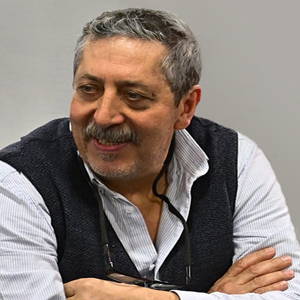
Rüştü KAM
21.09.2026 – BERLIN
Comments
0 commentsNo comments on this article yet. Be the first!