
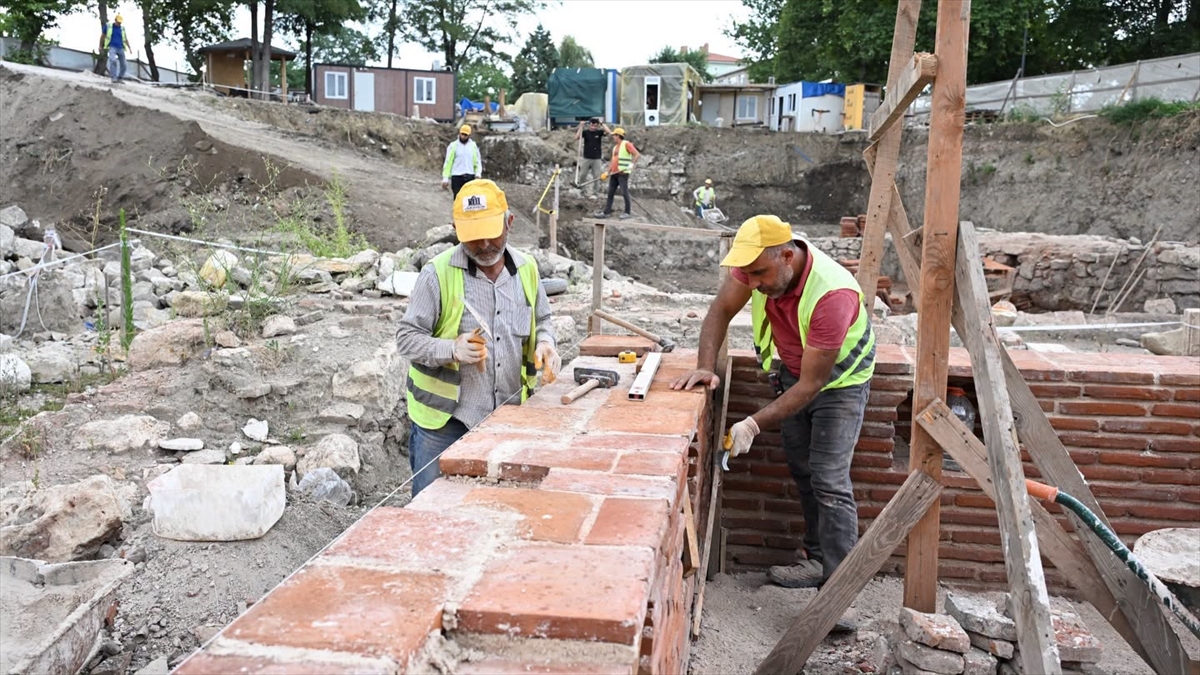
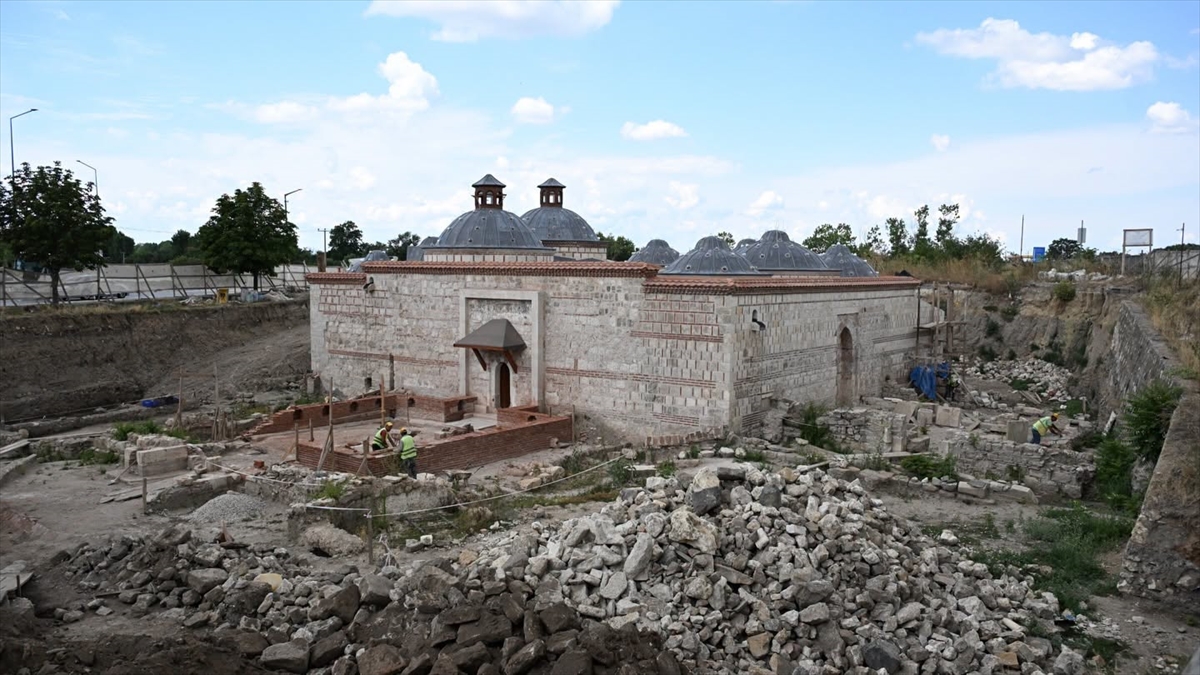
Edirne'nin önemli erken Osmanlı mimarisi örneklerinden 6 asırlık Gazi Mihal Hamamı'ndaki restorasyon çalışmaları tamamlanma aşamasına geldi.
Vali Yunus Sezer'in talimatıyla iki yıl önce başlatılan ihya çalışmaları kapsamında, tarihi yapının çevresi temizlendi. Kapıkule Sınır Kapısı yolu üzerinde bulunan hamamın toprak altında kalan bölümleri gün yüzüne çıkarıldı.
Hamamın dış cephesi, çatısı ve iç mekanlarındaki restorasyon eş zamanlı yürütüldü.
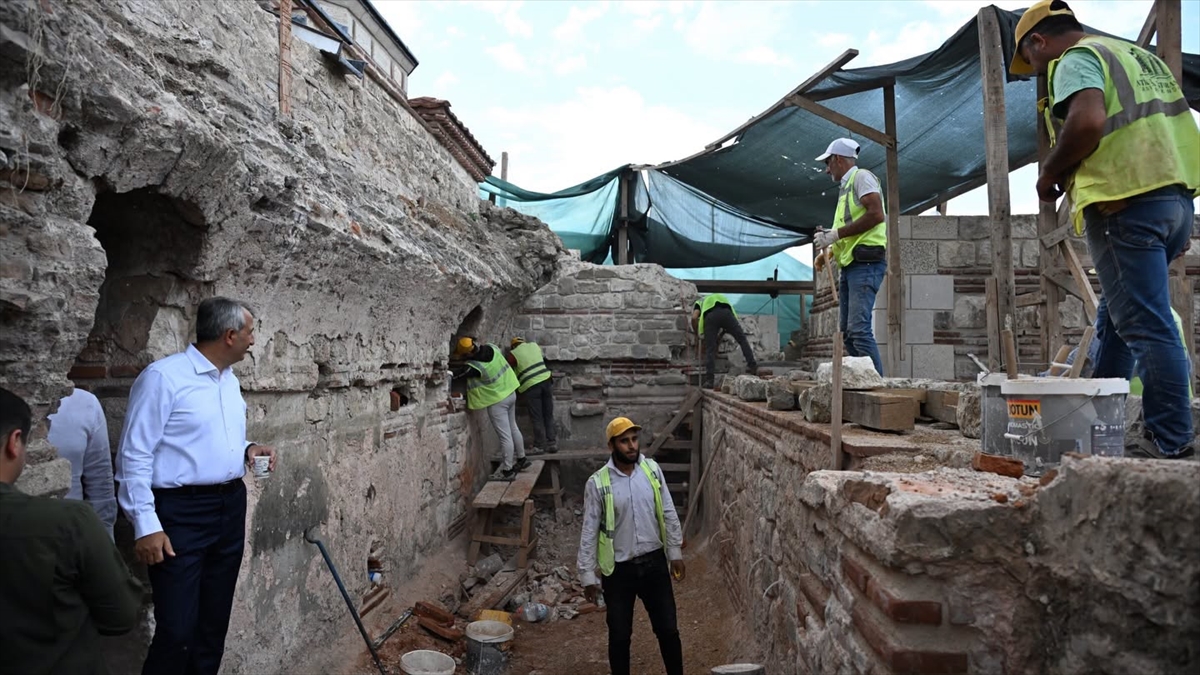
Vali Sezer, Gazi Mihal Hamamı'nda incelemelerde bulunarak yetkililerden bilgi aldı.
Vali Sezer, hamamın aslına uygun restore edildiğini belirtti. Tarihi yapının kısa sürede şehrin kültürel ve sosyal yaşamına kazandırılacağını ve yeniden hizmet vermeye başlayacağını kaydetti.
Vali Sezer'e incelemeler sırasında Vali Yardımcısı ve İl Özel İdaresi Genel Sekreteri Eyyüp Batuhan Ciğerci ile Edirne Vakıflar Bölge Müdürü Ahmet Saraç eşlik etti.
Gazi Mihal Hamamı
Tunca Nehri kenarında yer alan hamam, Osmanlı Devleti'nin kuruluş döneminde önemli hizmetler veren akıncı beylerinden Mihaloğulları ailesinden Gazi Mihal Bey tarafından 1422'de inşa edildi.
Kesme taş ve tuğladan yapılan hamamın duvarları özgünlüğünü koruyor.
Gazi Mihal Bey Camii ve İmaret Köprüsü ile bir külliye oluşturan hamam, 1829'daki Rus işgali sonrası tamamen kapanmıştı.

Comments
0 commentsNo comments on this article yet. Be the first!