
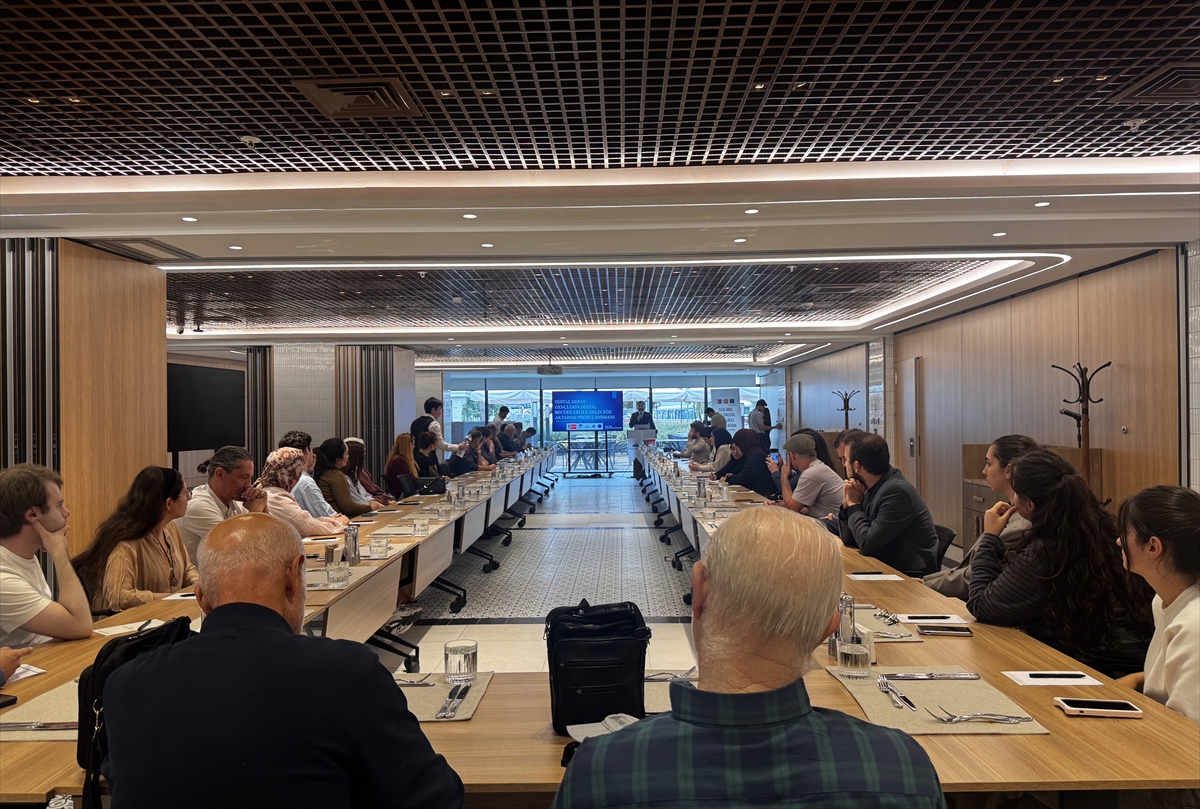
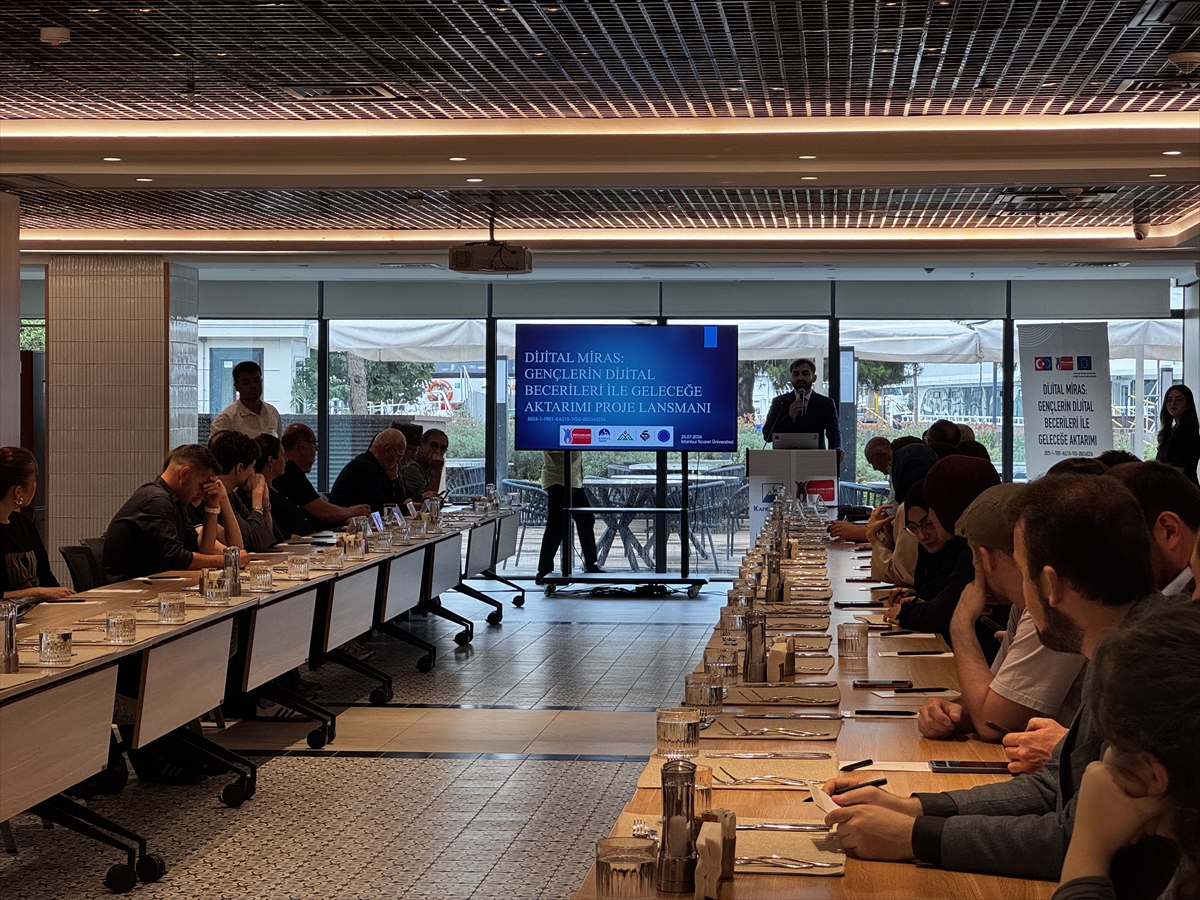
The outputs of the Caucasian Foundation's project "Digital Heritage: Transferring to the Future with Young People's Digital Skills," supported by the Turkish National Agency within the scope of Erasmus+ Small-Scale Partnerships in the Field of Youth, were introduced at Istanbul Commerce University's Eminönü Ahi Çelebi Campus.
Project partners, academics, representatives of non-governmental organizations, and young participants attended the program.
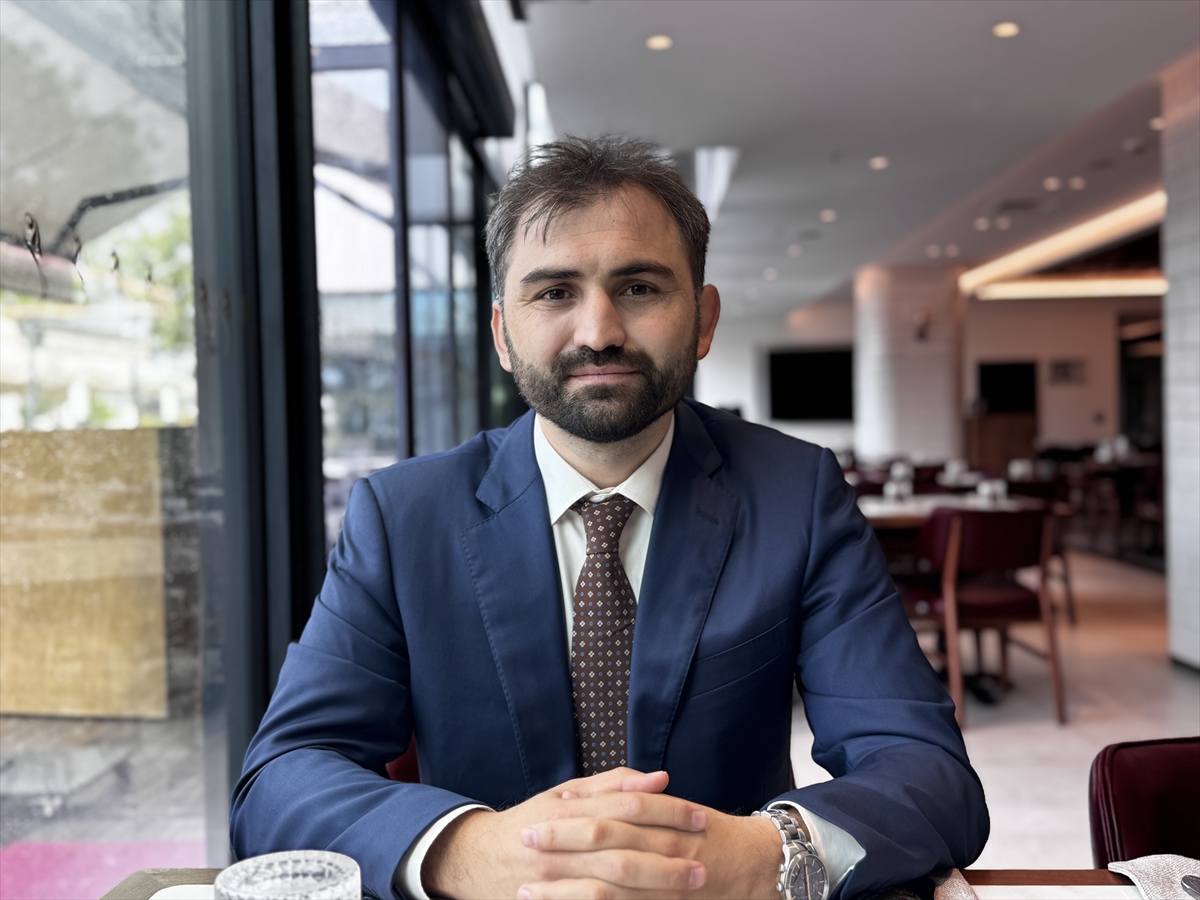
Veysel Arıhan, Chairman of the Board of Directors of the Caucasian Foundation, stated that the foundation has been active for 32 years and has recently focused on cultural and social projects for young people.
Arıhan noted that the project, carried out with the support of the Turkish National Agency, is focused on digital transformation. He stated that the aim is to transfer the foundation's library, consisting of approximately 6,000 books, and the project partners' collections in different languages to the digital environment.
Arıhan said: "Our libraries contain works in approximately 80 different languages. Accessing these resources from different countries around the world is quite difficult. So, we thought about how we could transfer them to the digital environment. At the same time, we aimed to provide training to young people in the fields of digitalization, digital archiving, and artificial intelligence."
The project was carried out in partnership with the Chechen Institute of Paris, the Circassian Cultural Association of Bremen, and the Shamil Education and Culture Foundation. Participants conducted studies at institutions in Turkey such as the Rami Library, the Center for Islamic Studies (İSAM) Library, and the Research Centre for Islamic History, Art and Culture (IRCICA). They also had the opportunity to observe digital transformation practices on-site at important libraries and archive centers in Germany and France.
Arıhan stated that participants received practical training in digital archiving, data management, and cataloging during the project. Arıhan said: "Today, as the final stage of this, we are launching the digital library established by young people. They created the entire system themselves, building the digital infrastructure by processing data from A to Z."
Arıhan stated that the project is the beginning of new endeavors, adding: "The average age of our friends is 24-25. We have a very dynamic team. We saw this project as the first step. We are still at the beginning. With the experience we gained from our state institutions, libraries, and various private archives, we aim to develop new digitalization projects and make them accessible to more people."
During the program, the digital library infrastructure developed within the scope of the project and other project outputs were introduced to the participants.
Digital Heritage Project
Within the scope of the project, which started in October 2025, participants attended training and technical visit programs at IRCICA, İSAM Library, the Ottoman Archive of the Presidency's State Archives, Rami Library, Istanbul University Rare Books Library, and Salt Galata Archive.
Within the scope of the work carried out in March and April, a digital library infrastructure was created, and an automation system was established after completing scanning, classification, and analysis processes.
In the mobility programs carried out in Germany and France, participants received training on digital archiving, information management, and the use of artificial intelligence technologies in archive systems at the Berlin State Library, the National Library of France, La Contemporaine at Paris Nanterre University, and the Louvre Youth Center Library.
The project, supported by the Turkish National Agency in 2025 within the scope of Erasmus+ Small-Scale Partnerships in the Field of Youth, is being carried out under the coordination of the Caucasian Foundation in partnership with the Shamil Education and Culture Foundation, the Chechen Institute of Paris, and the Circassian Cultural Association of Bremen.
Within the scope of the project, the aim is to develop young people's digital competencies, transfer cultural heritage to the digital environment, and deliver it to future generations. In this regard, participants attended training sessions in libraries and archives in Turkey, as well as in Germany and France, conducting studies on digital archiving, data management, and artificial intelligence applications.

Comments
…Loading comments…