
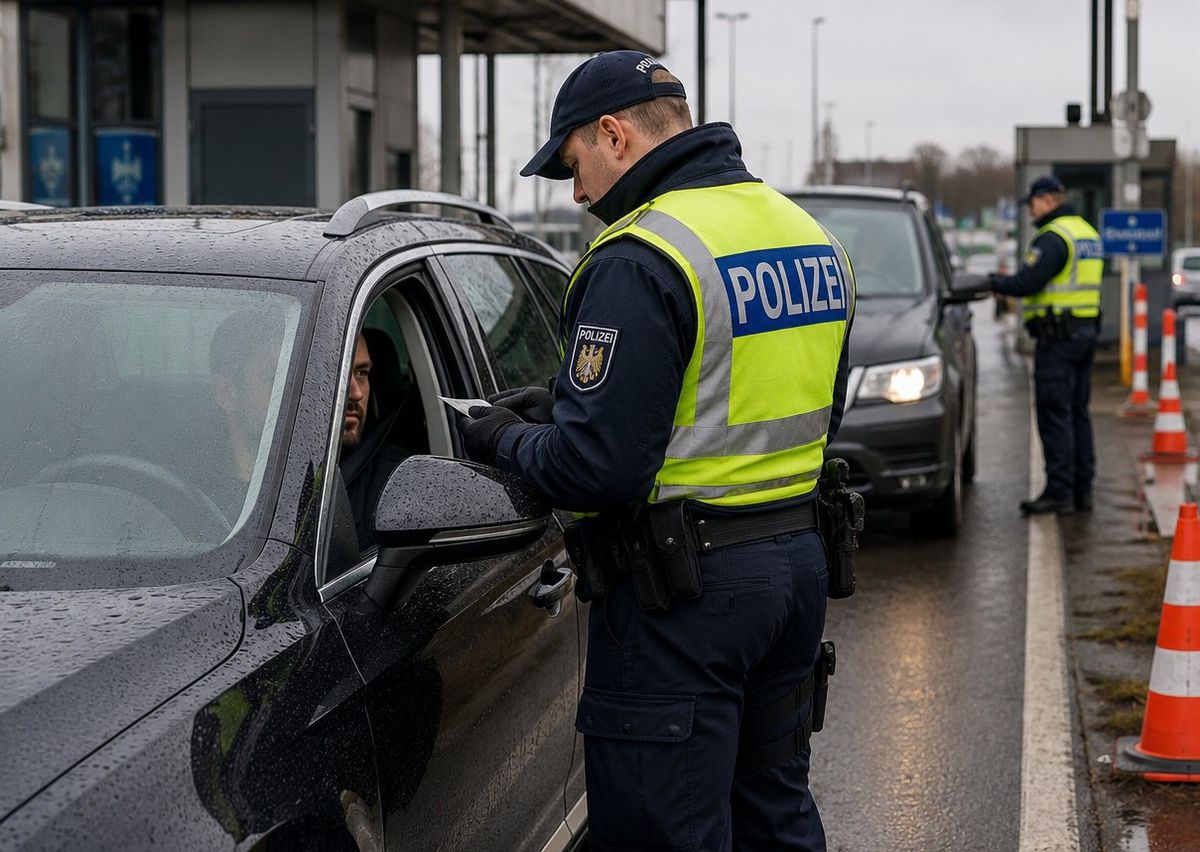
Germany will apply to the European Commission to extend controls at its land borders until March 2027, citing the fight against irregular migration. While Interior Minister Dobrindt bases the decision on 'extraordinary circumstances', the opposition argues that the controls cause disruptions in traffic and logistics and create racial profiling.
Germany will apply to the European Commission to extend controls at its land borders until March 2027, citing the fight against irregular migration. While the decision drew criticism from the opposition, it was argued that the controls caused disruptions in traffic and logistics.
German Interior Minister Alexander Dobrindt stated that the government would resolutely continue border controls as part of the fight against irregular migration. Dobrindt will apply to the European Commission for the extension of controls at the country's land borders until March 2027.
Dobrindt cited developments at Europe's external borders and "extraordinary circumstances" as justification for the extension of border controls. Dobrindt had announced the decision at the end of July. The announcement came after numerous asylum seekers attempted to swim to Spain's autonomous region of Ceuta in North Africa, and more than 100 people lost their lives.
Germany's current border controls were expected to end after the reform of the Common European Asylum System (GEAS), which came into force in June. However, following Berlin's new application, the controls, if the European Commission does not object, are expected to be automatically extended for another six months and last until March 2027.
Clara Bünger, a Member of Parliament for Germany's Left Party, reacted to the decision. Bünger pointed out that various courts have found no extraordinary situation in Germany that would justify border controls.
Bünger, who argued that unauthorized entries into Germany have significantly decreased in recent years, said that border controls lead to racial profiling, disruptions in traffic and logistics, and long vehicle queues. Bünger also stated that the controls create millions of euros in additional costs for the Federal Police and increase their overtime burden. Baba Agency/Berlin

Comments
0 commentsNo comments on this article yet. Be the first!