

Some individuals, who have made it their profession to oppose Atatürk and have made worshipping the power of imperialists a distinct part of their personality, claim that we did not fight the British during the War of Independence. When told that we fought Britain, these individuals dismiss it by saying, “This is official history.” Because these people prefer to believe the lies of imperialism rather than the witnesses of their own history. Isn't it interesting how most of these types of people emerge from among liberals, those who mistake liberalism for leftism, Islamists, and separatists?
We fought the British from the beginning to the end of our War of Independence. Because they were the ones who directed the Greeks, who occupied our homeland, to this task. It was also the British who wanted to destroy our homeland and our nation. Britain was the global hegemon of that era.
Immediately after the Armistice of Mudros, the British navy was at the forefront of the forces that came to occupy Istanbul. It was the British who, on March 16, 1920, at 05:45, raided the dormitory where the 10th Caucasian Division's Band Team was staying in Şehzadebaşı, killing four unarmed soldiers in their sleep, following the acceptance of the National Pact by the Assembly of Deputies on January 18, 1920.
From the very first day he embarked on the path to liberation, Atatürk consistently targeted Britain. He emphasized that this war was against the British. Wasn't his arrest of British Intelligence Colonel Alfred Rawlinson, while still in Erzurum, considered an act of war against the British? Additionally, a total of 32 officers, who were serving in various parts of Anatolia and inciting the public against Atatürk and his comrades, causing dissension, were arrested. These officers were later released as prisoners of war when the Malta exiles were sent back to our country.
On March 16, 1920, after the official occupation of Istanbul by the British, Atatürk ordered the 20th Corps, under the command of Ali Fuat (Cebesoy) Pasha in Eskişehir, to remove the British unit stationed in İzmit. With the operation that began on March 20, 1920, the British were forced to retreat to Gebze. This operation is known as the Adapazarı-Geyve battles. The enemy soldiers killed in this war are in the British cemetery in Haydarpaşa.
Atatürk never gave up on Mosul and Kirkuk. Even under the most difficult conditions, he was concerned with these two Turkish cities. On December 16, 1921, the British attacked Rawanduz (today a district of Erbil) with a large ground force supported by air. In January 1922, British attacks on the region intensified. Thereupon, on February 1, 1922, Atatürk appointed Militia Lieutenant Colonel Şefik Özdemir Bey to lead the operation to Rawanduz.
“In response to Faisal's claim to government in Iraq and his actual seizure of a part of Mosul province, which is included in our National Pact, and his attempts to extend his aggression into our national borders by engaging in provocations and incitements in the region, it has been deemed appropriate for Özdemir Bey to commence operations in the Elcezire region at the head of the staff shown in the attached note, with the aim of countering these mischievous activities of the aforementioned and reclaiming the occupied parts within our National Pact borders in Elcezire from those who have usurped them, and he has been given the necessary instructions. (Atatürk's Complete Works, Kaynak Yayınları, Volume: 12, Second Edition: October 2005, p.257)” As can be understood from these lines, Atatürk regarded Mosul and Kirkuk as being within “national borders.” Özdemir Bey is assigned to these lands to prevent attacks carried out through Faisal-British cooperation.
“The Elcezire Front will provide Özdemir Bey with a monthly allowance from the covert fund, in addition to his rank's salary, proportional to the importance and scope of the duty he has undertaken.
The amount of this allowance is left to the discretion of the Front Command. (Same work, p.258)” As can be seen, the matter has been considered in detail. The unit to be formed by Özdemir Bey will consist of militia forces from the local population. Şefik Özdemir Bey is well-versed in guerrilla warfare. He is highly experienced in organizing militia forces. He is an officer who demonstrated significant merit and gained experience in the defense of Gaziantep. In addition to Özdemir Bey, 1 major, 6 captains, 6 first lieutenants, 9 second lieutenants, 6 acting officers, and 1 accounting officer are sent to the region.
The Commander of the Elcezire Front is Cevat Çobanlı Pasha, who returned three months before from exile in Malta. Çobanlı Pasha was the commander of the Çanakkale Naval Victory and had previously served as the Chief of General Staff of the Ottoman Empire. He is an important commander who spent a significant part of his life on battlefields. The headquarters of the Elcezire Command is in Diyarbakır. Özdemir Bey and Çobanlı Pasha prepare the operation plan in Diyarbakır.
After making the necessary preparations, Özdemir Bey launched his operation in August 1922. He attacked the British battalion in the Derbent Pass. A telegram sent from the region to the British Occupation Command on August 31, 1922, reported that “4 of their aircraft were shot down, over 100 of their men were killed, including 3 officers, and 6 machine guns and 2 cannons were seized by the Turks” in the Turkish attack. When the wounded are also accounted for, it is understood that almost an entire battalion was annihilated. This raid, carried out on August 31, is called the Battle of Derbent Pass. This raid prevented the British from focusing on the Great Offensive. Thus, Britain had no opportunity to intervene in the Turkish attack, which it had not been forewarned about.
On April 8, 1923, the British attacked Özdemir Bey's unit with numerous armored vehicles and aircraft, supported by some of the regional tribes, especially the Assyrians. Since our units intended to be sent from the Eastern Front as support to the Elcezire Front could not reach the region, Şefik Özdemir's forces were defeated and dispersed. Şefik Bey and his comrades-in-arms escaped by crossing into Iranian territory. While carrying out this operation, the British concentrated their forces in the Mosul region, leading them to consider evacuating Istanbul as a necessity. Because what was important to them was the Mosul oilfields. Thus, Istanbul came into our hands without a single shot being fired.
The biggest problem in our country is that some people speak on every subject without documents or information. Therefore, speaking or commenting without knowing the conditions of the period in which an event occurred is very damaging. Atatürk and his comrades' extraordinary sacrifices, superior foresight, keen intellect, and experience gained on battlefields led them to success. The damage inflicted upon our society by the ignorant who try to build historical consciousness on British lies is incomprehensible. Eventually, the light of the sun will dispel the dimness and darkness created by imperialism's lies. Truth has a way of coming out. The truths of the War of Independence era are also emerging one by one, despite the efforts of collaborators to obstruct them.
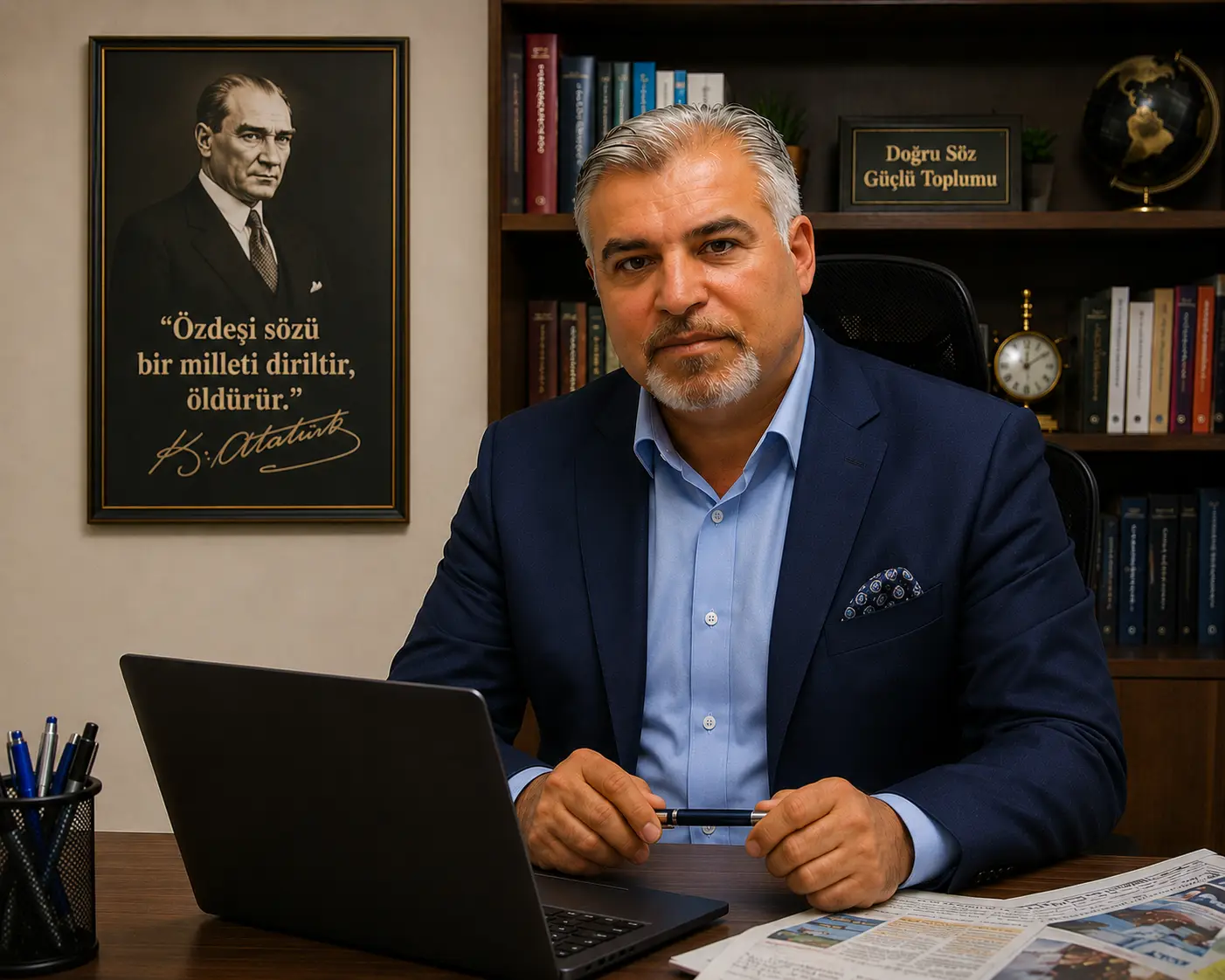
Adil Hacıömeroğlu




Comments
0 commentsNo comments on this article yet. Be the first!