
Summer has adorned itself with all its beauty. It's July. The train is bustling with mostly young people in fresh, comfortable, and colorful clothes. A joy, whose origin I again don't know, emerges within me. It must be the effect of the season. Or of the sparkling blue sky. Or of people reading books despite everything. Perhaps the lovely and very stylish elderly couple, whose sincerity shines on their faces, smiling and greeting. Or of a cheerful group of friends trying to make room for me. Perhaps of life flowing abundantly – despite everything...
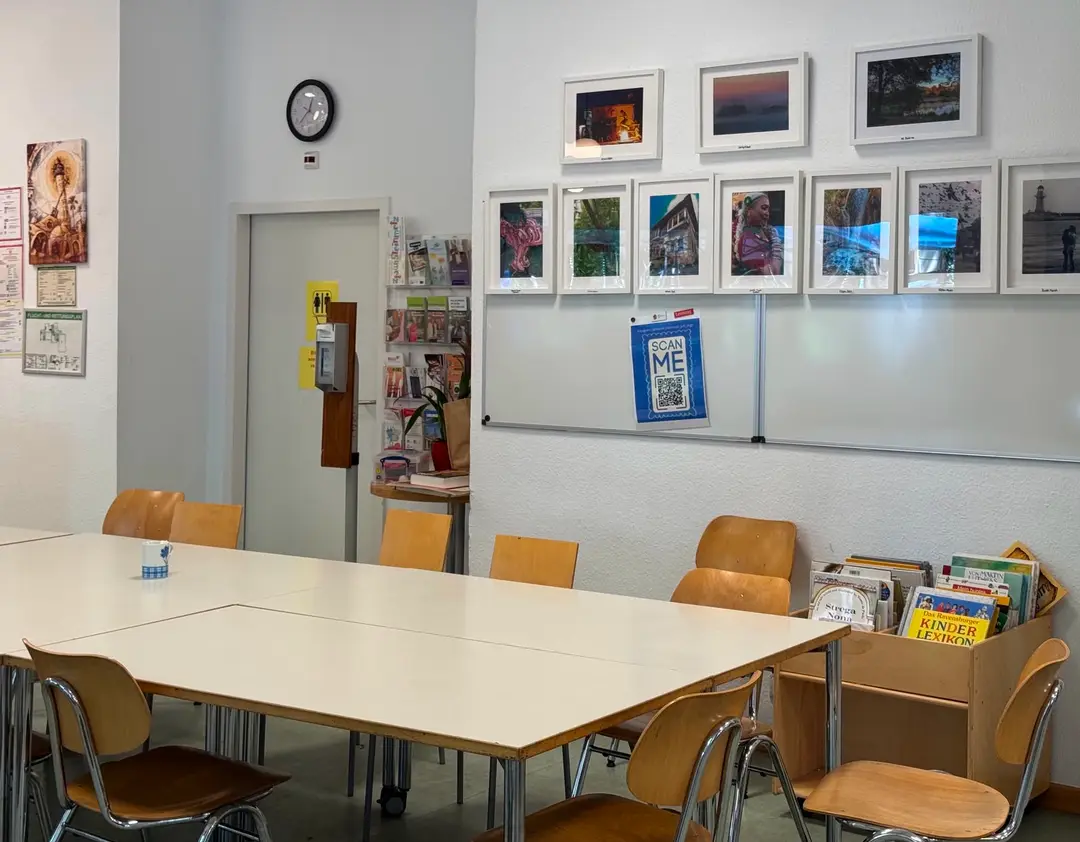
It takes me five minutes to get off the train and arrive at the venue. However, what greets me is more of a 'neighborhood house' than an exhibition hall. It's a complete neighborhood house, with feverish meal preparations, women gathered around a large table sewing and chatting, men engrossed in their phones, students studying with books and notebooks open, and children coming, going, and running around.
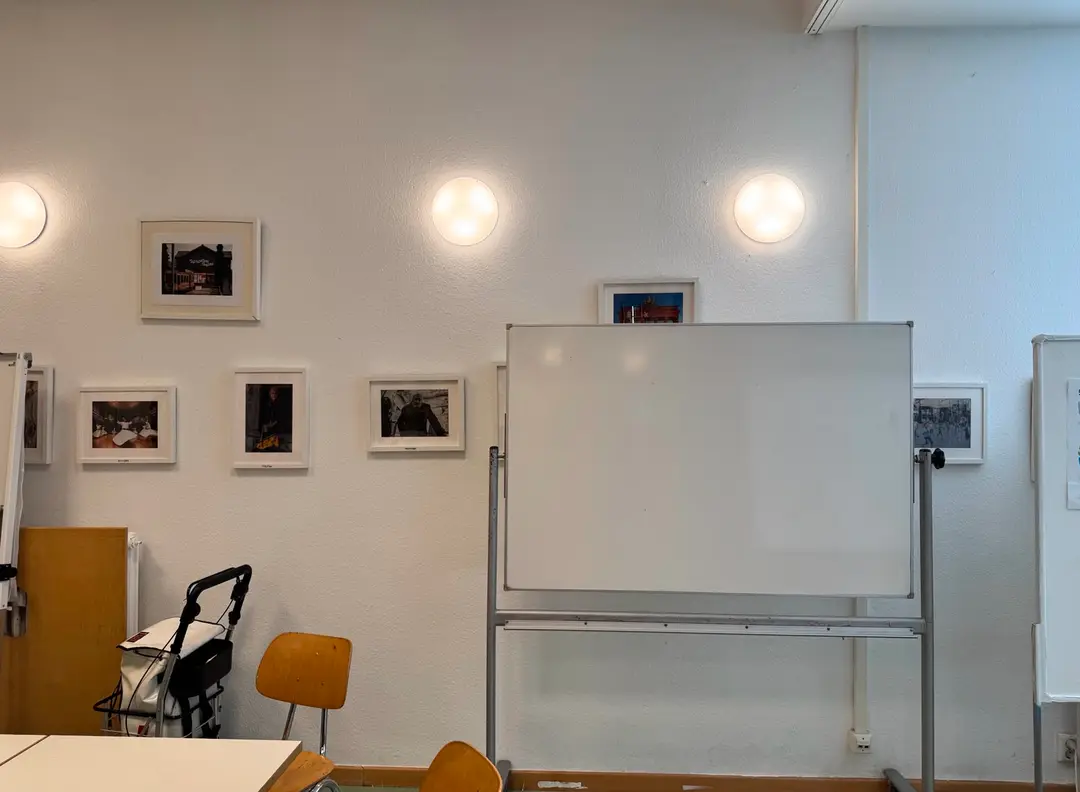
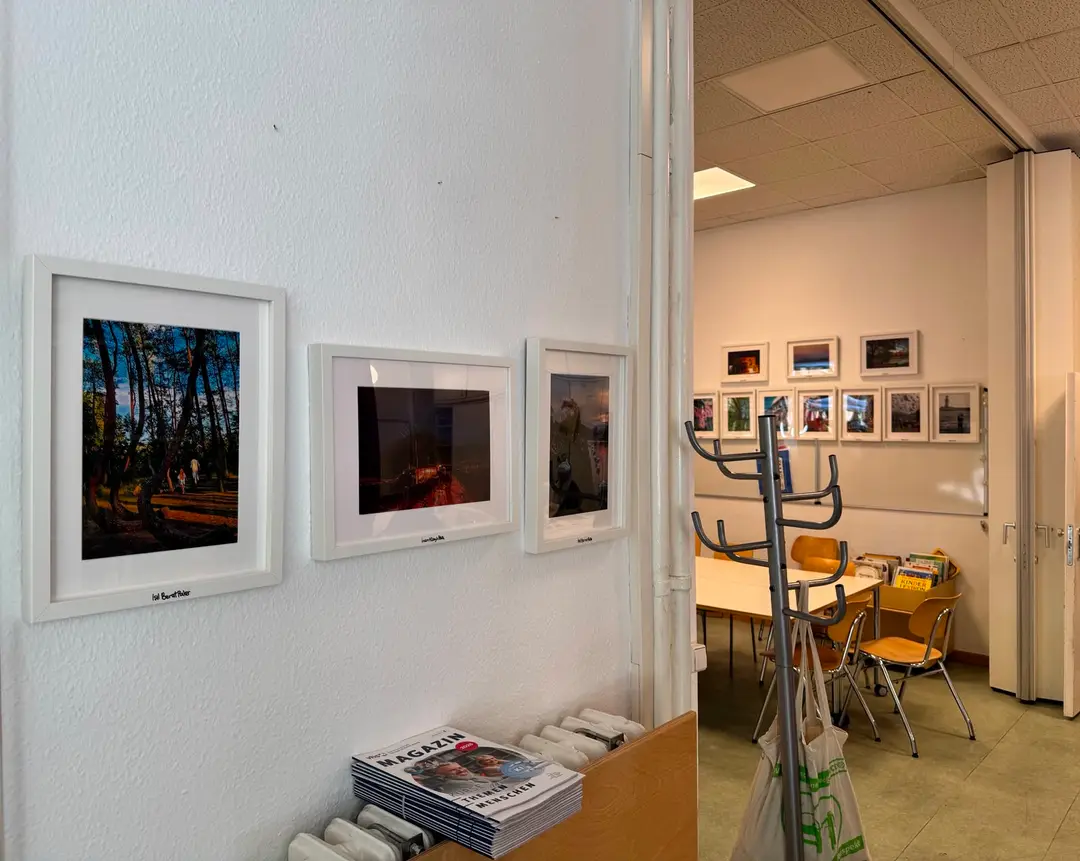
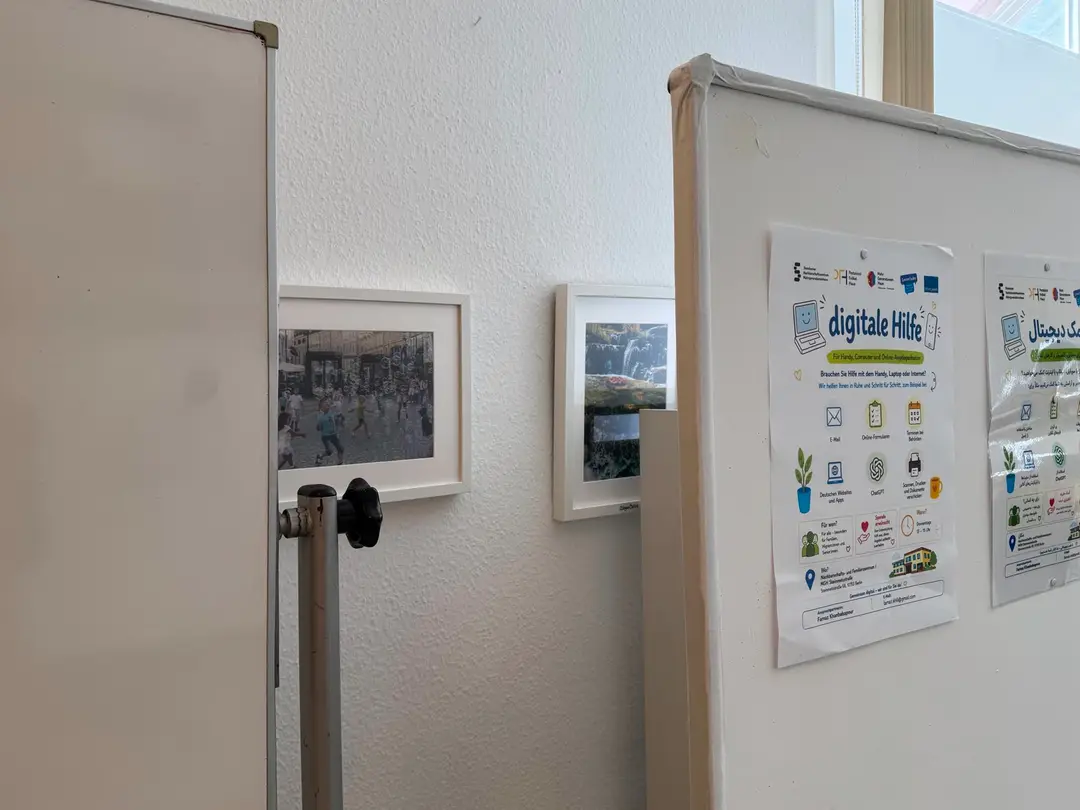
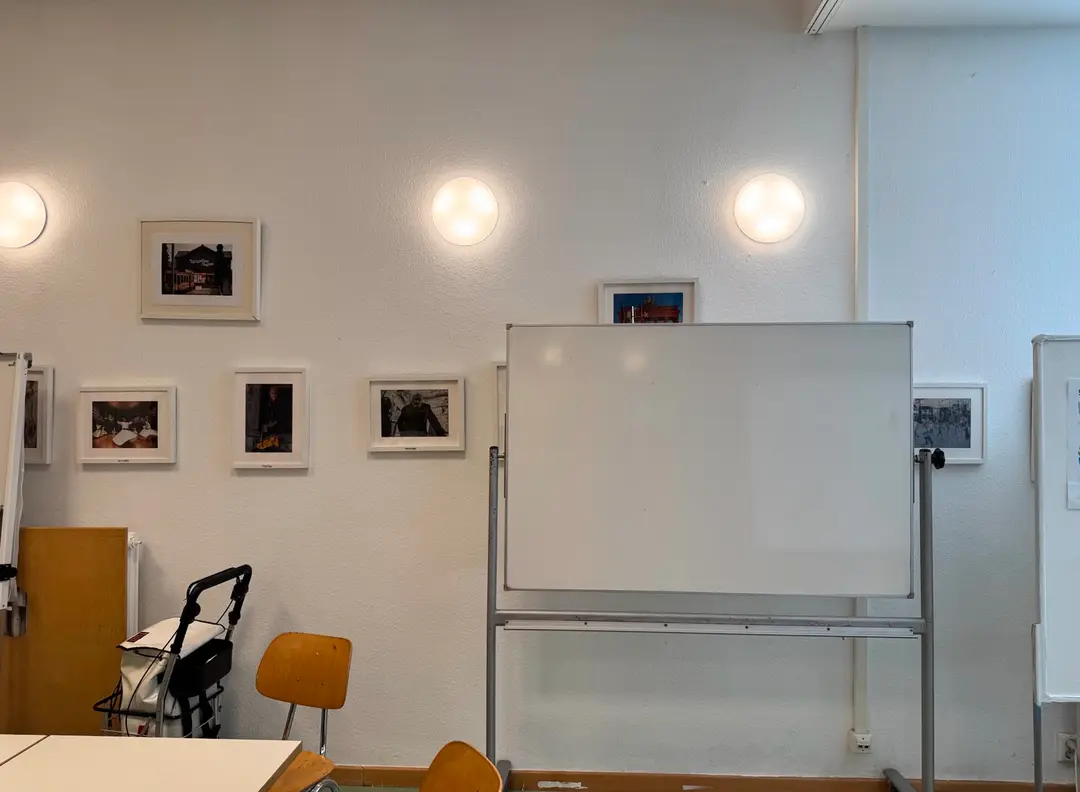
I detach myself from the environment and tour the exhibition. Then I return to where I started, from where I finished. To test the first thing that caught my attention, I ask a person there and offer to tour the exhibition together. They don't refuse me, and after viewing a group of photos together, I ask, 'What did you think?' For a moment, the embarrassment on their face is replaced by a smile, and they say, 'Honestly, I don't really understand much, but the pictures seemed a bit dark to me.' I can't help but say, 'You're brilliant!' and with that, we confirm a significant weakness of the exhibition.
Of course, the exhibition's weakness is not only that the photographs are -generally- printed darkly and, at first glance, are conspicuously poorly displayed. However, before delving into this, it seems essential to say a few words about photography and its content when the subject is a photo exhibition. Photography, as a language, discipline, and art form, holds a prominent place as the most important communication tool of our age. Its ability to contain time, or in other words, to bear witness to time, puts it two steps ahead of other disciplines. Photography, a tool for understanding and defining life, and holding the top spot among history's eyewitnesses, has also spearheaded social, political, and societal developments since its invention.
The world classic 'The Grapes of Wrath' tells the story of the Great Depression in 1930s America and especially the drama experienced by migrant workers. The FSA (Farm Security Administration), established against the effects of that great depression, documented the crisis with a photography project and also utilized photographs to overcome the depression. In other words, photographs taken by famous names like Dorothea Lange, Walker Evans, and Gordon Parks, who spread across the country, became important resources for overcoming the economic collapse.
When photographs of the war that began with America's invasion of Vietnam were published in major world magazines like Time and Life, anti-war protests rose across the entire world, especially in America and Europe, and the American government, unable to withstand this public pressure any longer, was forced to withdraw from Vietnam... Photographs taken by Eugune Smith in a coastal settlement in Japan called Minamata led to the closure of a chemical factory that spread death. The mercury that this chemical factory discharged into the sea for many years caused great harm to both the environment and all living beings and humans. Nervous system diseases, paralysis, severe congenital disabilities, and deaths... However, when Smith's photographs were published in many magazines and newspapers, protests against the chemical plant were organized worldwide, and especially in Japan, the largest rallies in history were held...
Much more can be said about photography, its power, its documentary feature, and its impact, as it appears in almost every area of life, from medicine to map-making. Reminding that we will touch upon these in future related articles, if we return to the exhibition, leaving aside such efforts, the lack of semantic and narrative integrity in the photographs stands out as a second significant weakness. It's easy to say, but the question of what 'seventeen' 'journalists' are telling us remains unanswered and meaningless. Because the exhibition has no theme, no message, and no purpose. Because, unfortunately, the photographs(!) are not much different from the familiar raw images that flow like a bombardment, repeating themselves in those well-known channels. And unfortunately, the exhibition also lacks a title, a text, and a narrative structure, which is just icing on the cake...
The topics we will address next might delve into the technical aspects, which may not interest the reader. However, let's mention, while we're at it, that photography has a major handicap. Unfortunately, the belief that every image taken is a photograph, or even a successful photograph, is quite widespread as a great misconception. The fact that mediocrity is experiencing its golden age is not without its effect on this. It is known that Reza, also known as Reza, took exactly 44,000 frames for his Turkey reportage prepared for Nationel Geographic, considered the world's largest magazine. However, the number of photographs published in the magazine is only 19. Reza says that out of tens of thousands of images, only a hundred are photographs, while the others are 'drafts' and 'trash'... In summary from all these explanations: without photography and art education, without dedicating many years to this work, without going on dozens of photo trips, without sweating and racking one's brains, without reading enough, without possessing the necessary basic knowledge, without looking at tens of thousands of photographs and countless albums, and without approaching photography and art with passion... unfortunately, draft and ordinary images taken with a mobile phone do not become photographs. Unfortunately, arranging these on a wall also does not make an exhibition... John Berger, a writer, art critic, painter, and journalist, explains in 'Ways of Seeing' how deep and comprehensive an image essentially is. Prof. Sabit Kalfagil, who emphasizes the definition of 'draft' in photography, addresses the sole criteria and composition principles necessary for an image to be a photograph in his book 'Composition in Photography'.
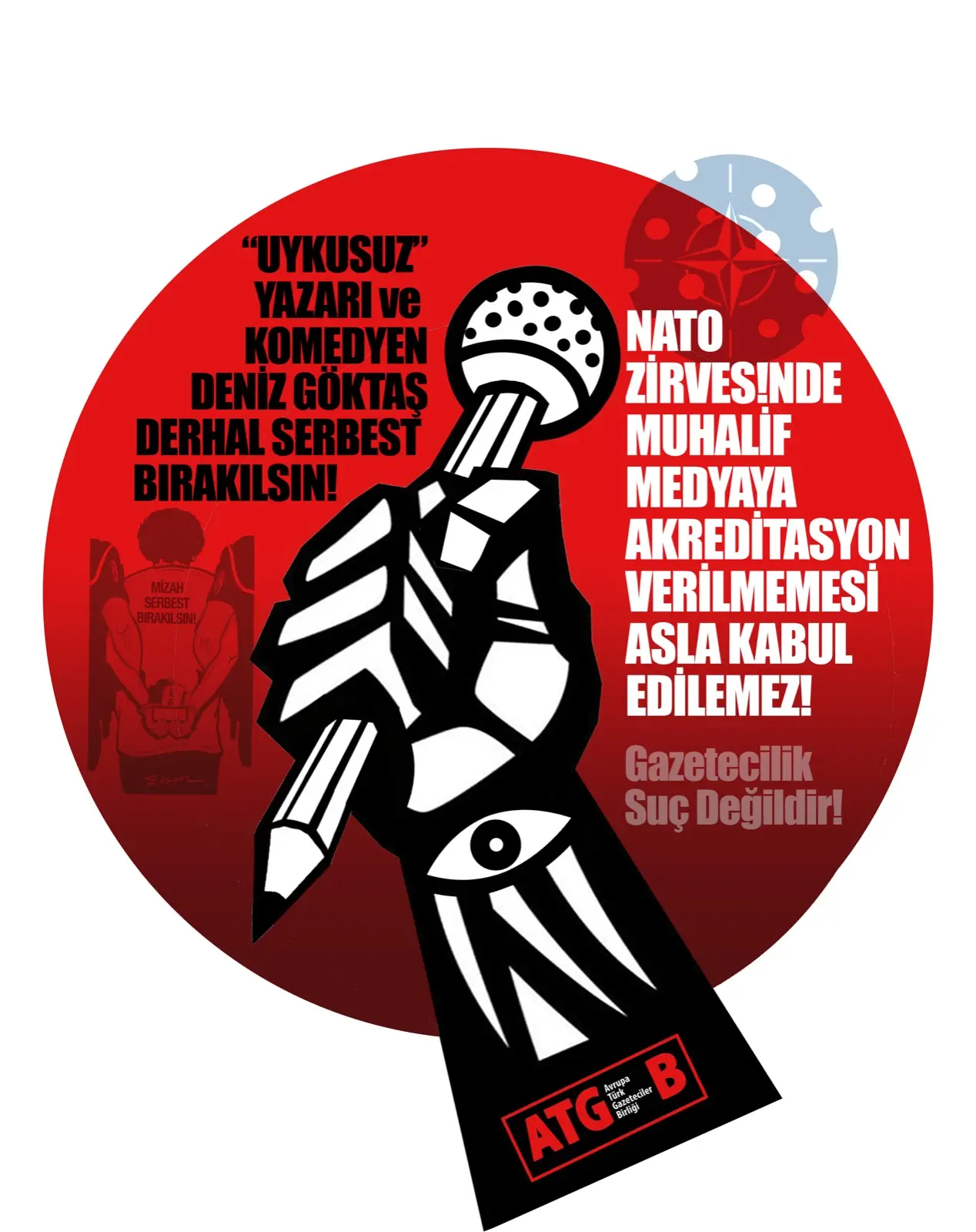
No matter how we look at the exhibition, apart from a few exceptions, neither the photographs nor the exhibition as a whole have any noteworthy aspect, whether from a documentary, artistic, or photographic discipline perspective. Furthermore, the fact that the 17 'journalists' whose exhibition is opened are members of the German-Turkish Journalists' Association (Atgb-Berlin) and that the exhibition was prepared by the aforementioned association, which operates in the name of 'journalism' in Berlin, Europe's cultural and art capital – meaning that despite all these opportunities and possibilities, such a mediocre work was presented – is truly a difficult matter to explain, yet quite thought-provoking...
Engin Kaban
Berlin, 26.07.2026








Comments
0 commentsNo comments on this article yet. Be the first!