
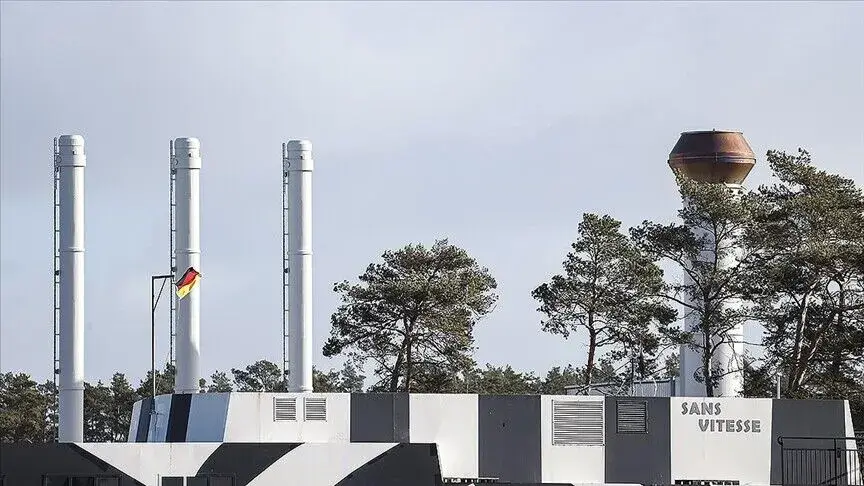
The Ifo Institute for Economic Research, headquartered in Munich, announced the results of the August Germany Business Climate Index, with the participation of approximately 9,000 firms.
The index, which was revised to 86.7 points in July, reached 88.8 points in August, significantly exceeding market expectations of 87.2 points.
Thus, the index continued its rise for the fourth consecutive month. It surpassed its level before the war in the Middle East, which began at the end of February.
During the same period, the Current Assessment Index, which measures companies' satisfaction with their current operations, rose from 86.5 to 88.5 points. The Expectations Index, indicating a decrease in pessimism about the future, also increased from 86.8 to 89.1 points.
According to Ifo survey results, the wave of optimism in the business world spread to all of the country's leading main economic sectors.
A significant rise was observed in the business climate index for the manufacturing sector. Sector managers assessed current business conditions more positively compared to the previous period. The skeptical approach to production expectations for the next 3 months decreased. However, dissatisfaction regarding insufficient orders persisted.
Macroeconomic Data Supports Recovery
The strong increase in the Ifo index also aligned with other macroeconomic data signaling a long-awaited recovery in Europe's largest economy.
Industrial production, particularly fueled by large public tenders for infrastructure and defense industries, along with export figures that exceeded expectations in June, were key factors supporting economic vitality.
Germany's gross domestic product (GDP) recorded 0.3% growth in the second quarter, surpassing the initial forecast of 0.2%.
Economy Recovers Despite Rising Energy Prices
Ifo President Clemens Fuest stated in his assessment of the data, "Despite re-escalating energy prices, the German economy is recovering. Companies are more satisfied with their current situation compared to the recent past, and their future projections for business partnerships are more optimistic."
Carsten Brzeski, Head of Global Macro Research and Chief Economist for Germany at ING, also noted in his published analysis that the Ifo index, the country's most important leading indicator, reached a one-year high in August. Stating that both the current assessment and expectations components significantly improved, Brzeski expressed that the confidence environment in the German business world has become almost immune to the long list of downside risks.
Brzeski emphasized that the resilience in the first half of the year was promising, but past performance is no guarantee of future success. He added that the recovery in the second quarter was partly related to other regions being hit harder due to the closure of the Strait of Hormuz.
Brzeski stated that some German companies have virtually become beneficiaries of the crisis during this period.
Brzeski reminded that the escalating tensions in the Middle East, turning into a permanent war, kept oil prices high. He noted that potential shocks in natural gas prices during the upcoming winter season and renewed trade tensions pose serious risks for the economic outlook.
Brzeski evaluated the start of infrastructure investments reaching the real economy as a positive development.
Carsten Brzeski, arguing that the government's current steps are insufficient for the German economy to return to a sustainable growth path, warned, "To fundamentally put the economy back on track, structural reforms that enhance international competitiveness, an affordable energy plan, and direct incentives such as tax cuts to stimulate domestic demand are still needed."
Brzeski added that despite all these challenges, the German economy is on track to achieve its best growth performance since 2022.
Comments
0 commentsNo comments on this article yet. Be the first!