
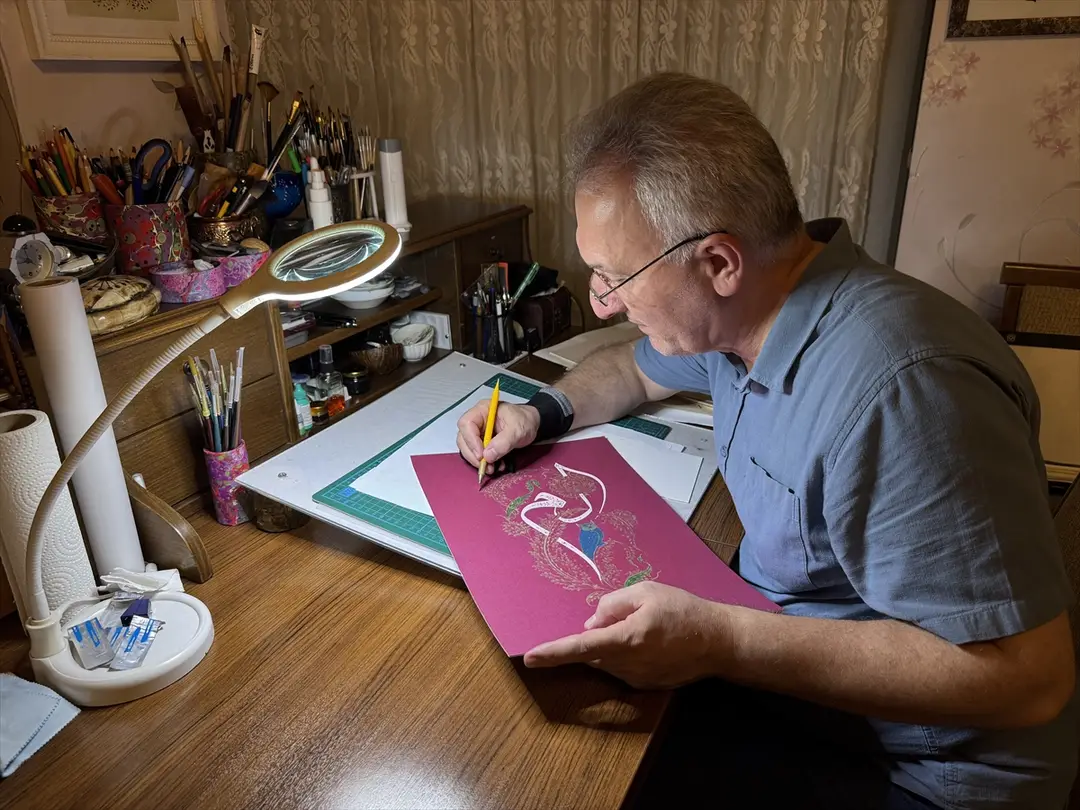
Yılmaz Çakmak, one of the representatives of şükufe art, which developed during the Ottoman period, aims to carry Turkish motifs on the verge of being forgotten to the future with his work lasting weeks. In this art, flowers are depicted realistically using a fine scanning technique.
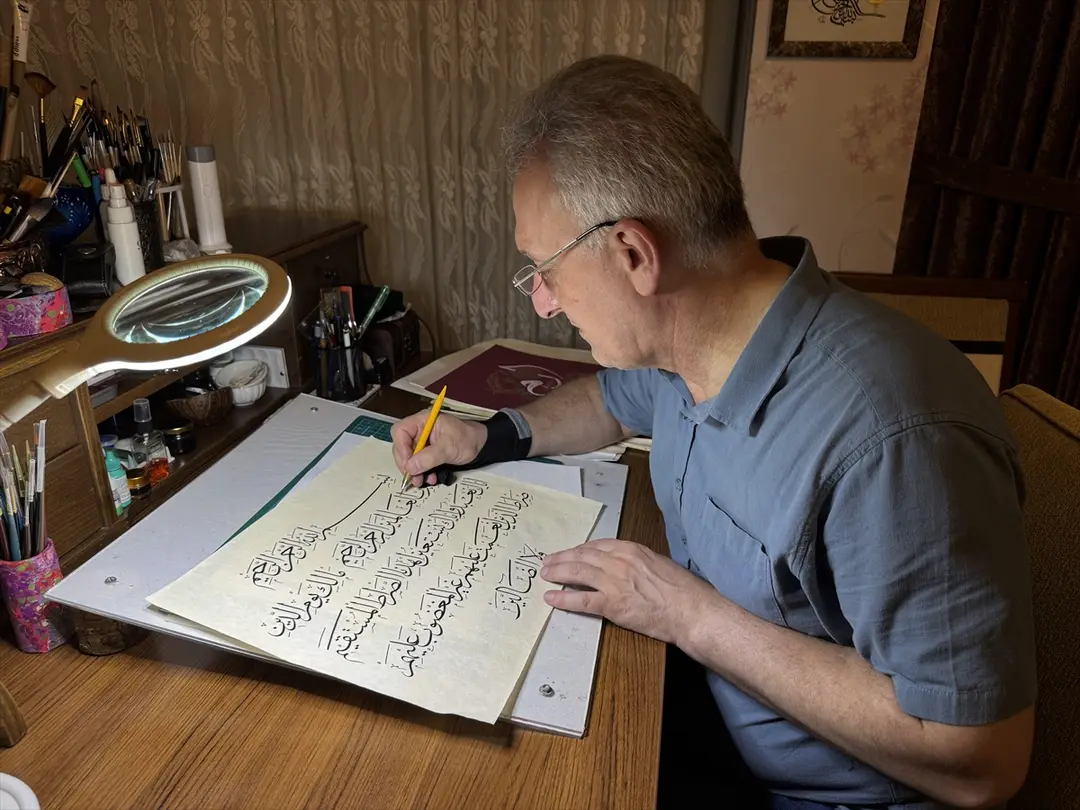
Çakmak, a 58-year-old businessman and father of three, turned to traditional arts approximately seven years ago. He began taking lessons in calligraphy (hat), illumination (tezhip), şükufe (flower art), and painting.
Çakmak, a licensed calligrapher, completed the Illumination Department of Kocaeli Metropolitan Municipality Conservatory. He continues his education as a 3rd-year student in the Traditional Turkish Arts Department of Kocaeli University Faculty of Fine Arts.
Yılmaz Çakmak stated that şükufe is a special painting technique that developed in the Ottoman Empire in the 18th century. In this technique, flowers are rendered with a naturalist approach. Unlike the stylized flower concept in classical illumination art, the real appearances of flowers in nature are taken as a basis.
Çakmak noted that this style became widespread with the reflection of the Rococo influence in Europe on Ottoman art. Şükufe is a term meaning "newly opened rose". Flowers are distinguished by a special technique, depicted with two-dimensional or multi-directional scans.
"Art should make people think"
Çakmak emphasized that the margin for error in şükufe art is quite low. He stated, "In şükufe, two, three, four, or even five-directional scans can be made. A very clear, transparent, and lovely painting emerges because there are no pictorial lines, movements, or brushstrokes in şükufe. Even a tiny line immediately shows, and it's difficult to remove. That's why it takes a bit long. In other words, scanning a flower's painting takes 2-3 weeks."
Çakmak pointed out that the number of people continuing this art in Turkey is limited, and stated that şükufe does not have a widespread educational curriculum like other traditional arts. He said that the art is passed down through a master-apprentice relationship.
Çakmak stated that he does not want to limit himself to a single art form. He conveyed that he aims to bring calligraphy, illumination, şükufe, and painting together on the same axis of thought.
Çakmak stated that doing a job very well can make a person a good craftsman, and pointed out that being an artist requires producing thought. He said, "Art should make people think. If the writing in a calligraphy piece, the gold in illumination, the colors used, and the flowers together create meaning, then we can speak of art there."
"I plan to provide education in the future"
Çakmak explained that the aspect of traditional Turkish arts that attracts him is their ability to carry thousands of years of cultural heritage to the present day. He said that a significant portion of the motifs, patterns, and symbols created throughout history have been forgotten.
Referring to his efforts to make this cultural heritage visible again in his works, Çakmak noted the following:
"We have a vast cultural heritage extending from the Uyghurs to the present day. There are thousands of years of culture and folklore. There are epics, symbols. Today, we have forgotten most of them. Some patterns that remained in our thousands of years of history... I try to use these in the works I create. An artist should have a vision and a mission to make what exists visible."
Çakmak stated that he plans to provide education in the future. He emphasized that he likens knowledge to zakat (charity), saying that it does not diminish when shared; on the contrary, it solidifies in one's mind.
Çakmak, stating that one grasps their own knowledge better when they start teaching, said, "When one starts to educate, they also start to be educated. When you share, you sit and think, 'I realized what I knew.'"

Comments
0 commentsNo comments on this article yet. Be the first!