
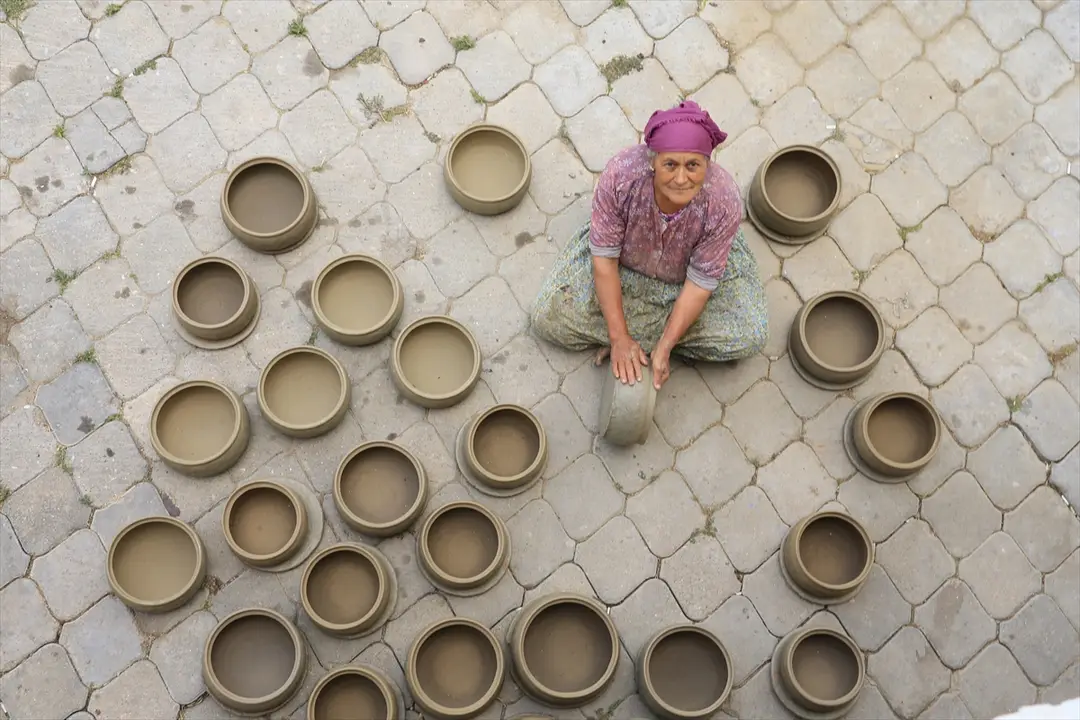
In Salihli district of Manisa, volcanic rocks within the borders of the UNESCO Global Geopark are processed using a pottery tradition passed down from generation to generation. These rocks are transformed into durable casseroles and pottery.
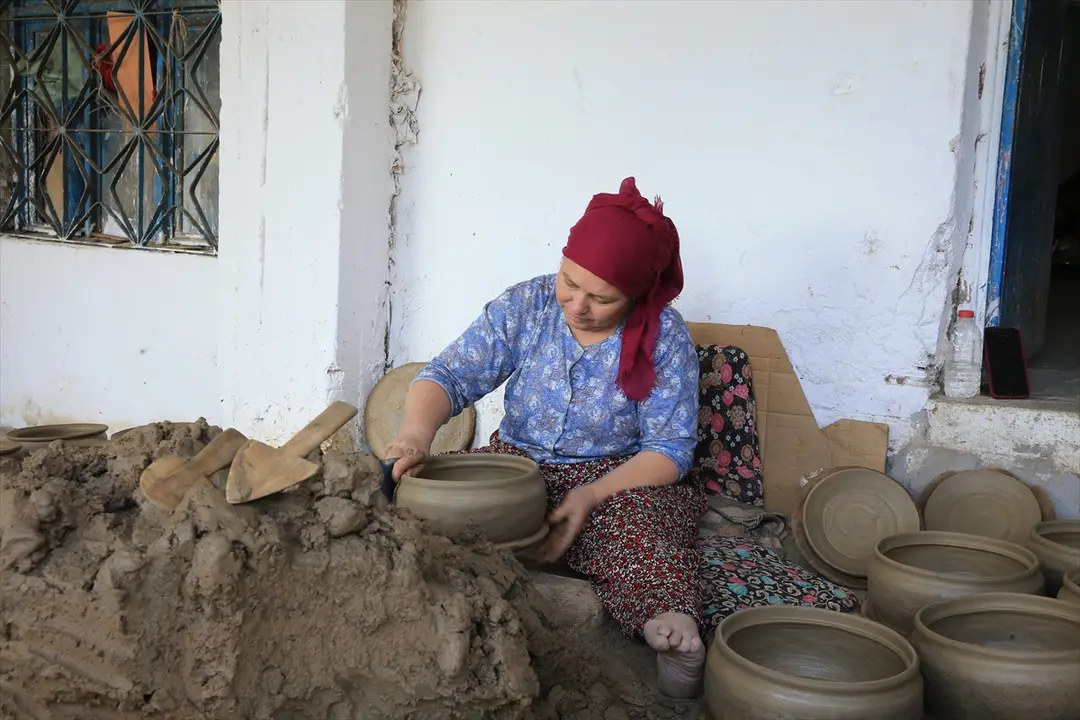
Volcanic rocks extracted from the Geopark area are carried to homes by local men. They are crushed into powder in grinding machines. The resulting rock powder is mixed with clay extracted from riverbeds to prepare the mud.
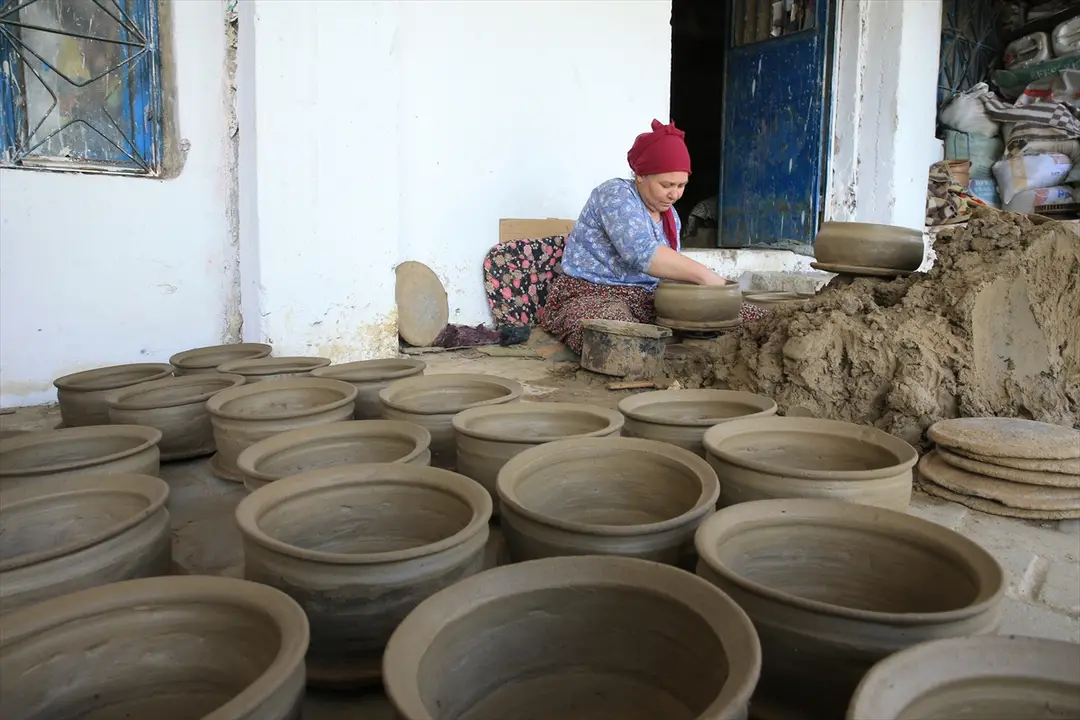
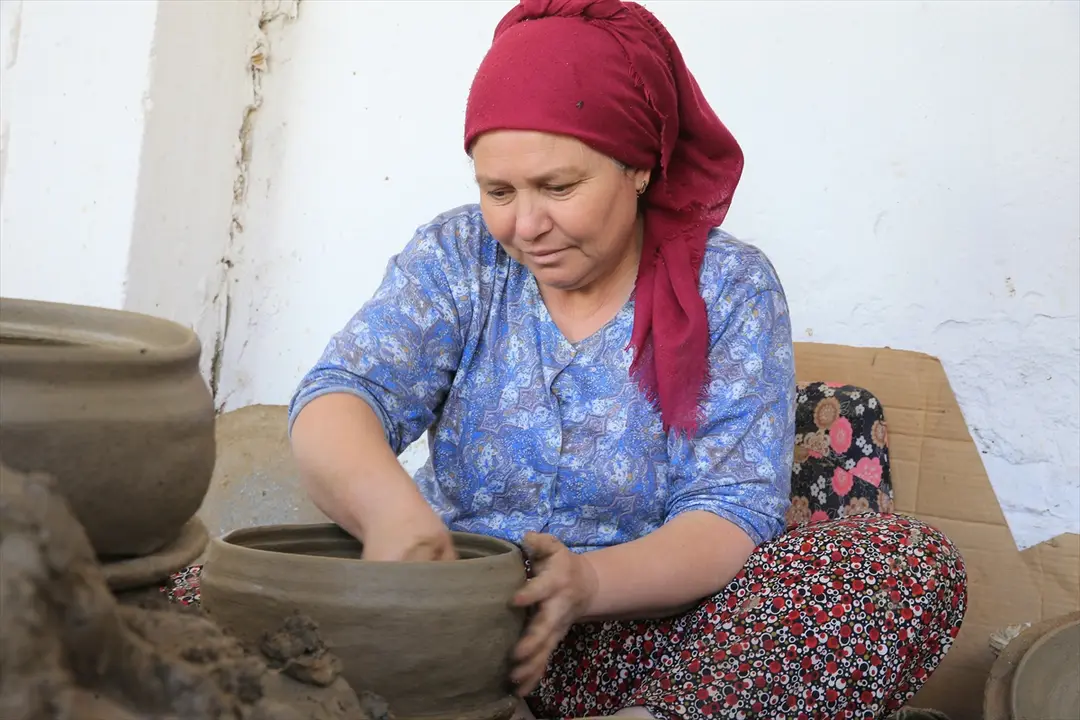
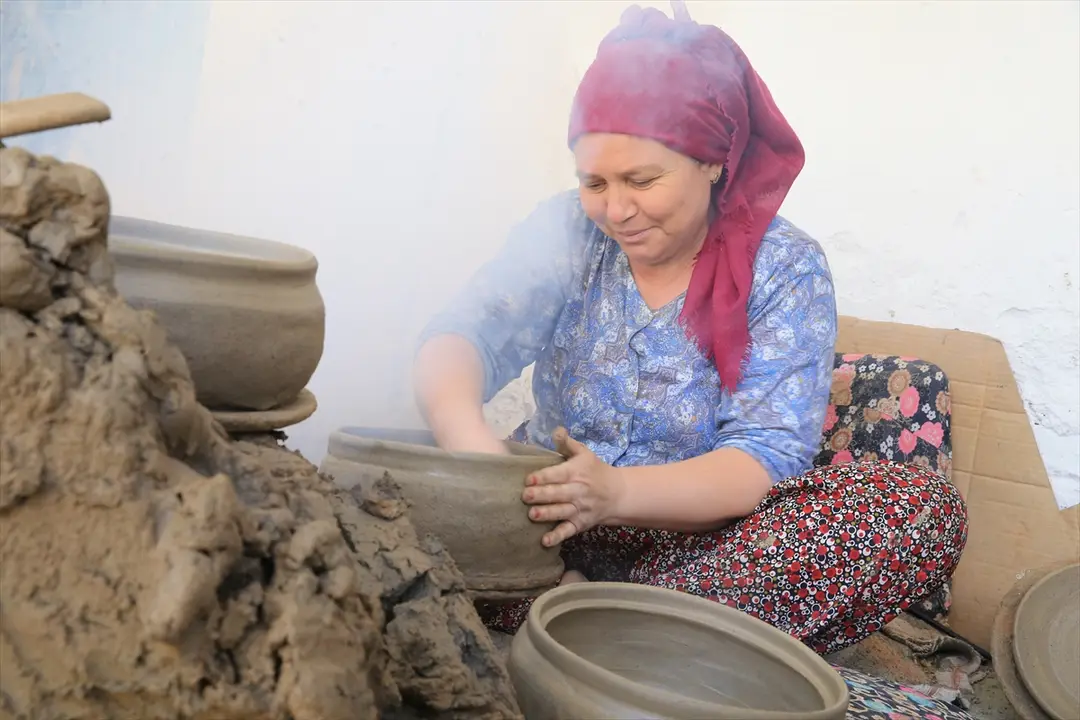
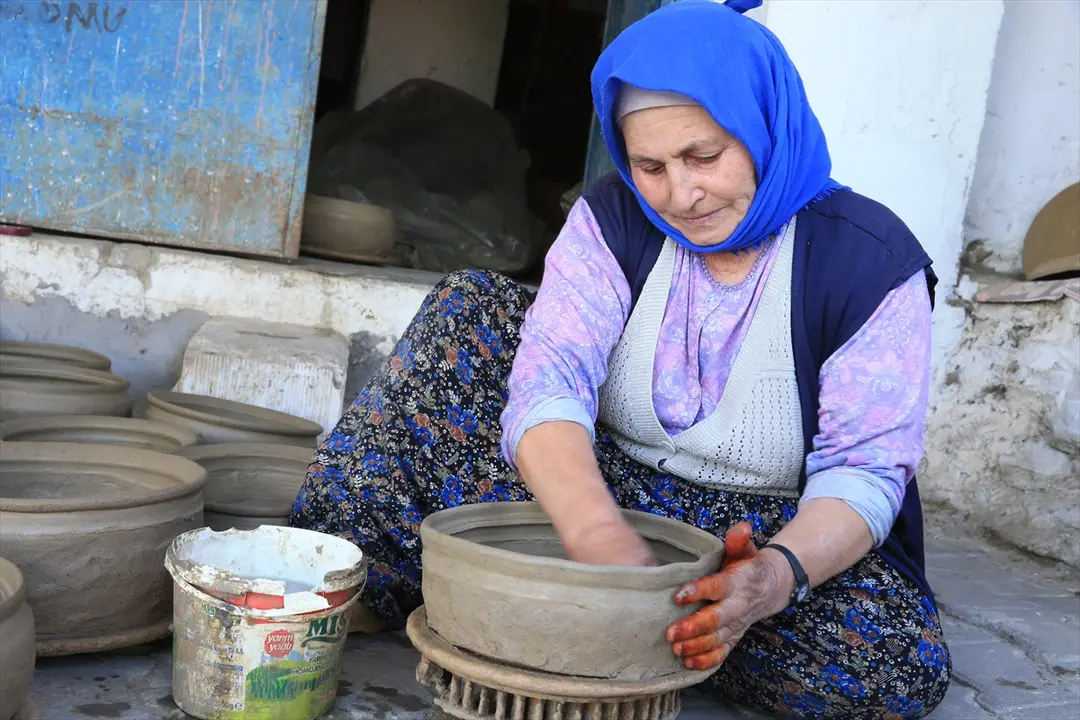
In the courtyards of their homes, women shape the mud to produce casseroles and pottery. Men undertake the firing and marketing stages. Thanks to the natural durability and luster provided by the volcanic structure, glazing is not required for the products.
In the neighborhood with a population of 1830, pottery is the main source of income for 25 households. The products are sent to different provinces of Turkey and abroad through traders. Especially before Eid al-Adha, there is high demand for the products.
Pottery master Emine Tangüç, who has been continuing the craft she learned in her ancestral home for about 30 years, stated that despite the challenging production process, they do their work with love.
Tangüç emphasized that pottery is a legacy that has been carried on the shoulders of women in the neighborhood for centuries, and said that every vessel they shape with their hands contains great effort and patience.
Tangüç, stating that they start working at their benches in the early hours of the morning, explained that they continue to work with all their might to pass this ancestral profession on to future generations despite all its difficulties.
Tangüç, stating that they earn their living from this craft, said, "May God bless us, we earn our bread, and we get by with it. We have a laborious job, but we are content with our situation. Our sales are generally steady, but demand increases even more during Eid al-Adha periods."
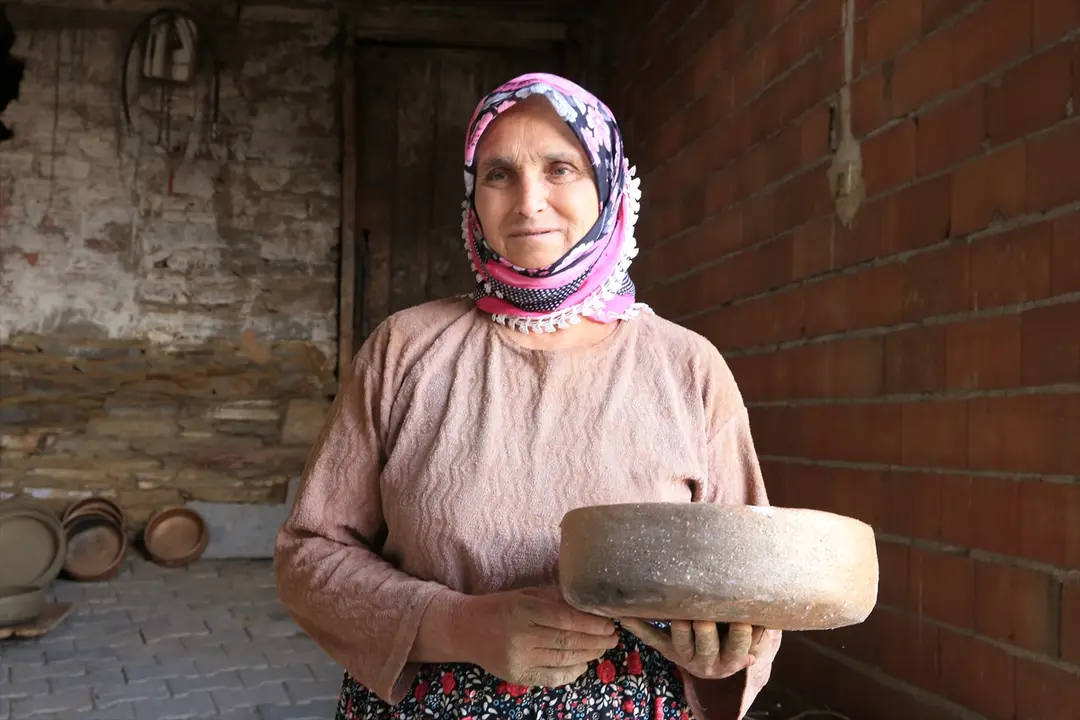
Sabriye Balkan, another master craftswoman in the neighborhood, also stated that she has been practicing the profession for 30 years, and conveyed that production requires great effort.
Balkan, explaining that the mud is prepared by kneading it like dough, noted the following:
"I learned this profession from my father at a young age. I don't think my children and grandchildren will continue it. Unfortunately, this profession is slowly dying out. We have a job that requires patience and strength; we work with mud at the bench all day long. Young people are no longer interested in this laborious craft; they are turning to ready-made jobs. Although we try to keep this ancestral profession alive as long as we are able, we are saddened that there will be no one to continue it after us."







Comments
0 commentsNo comments on this article yet. Be the first!