

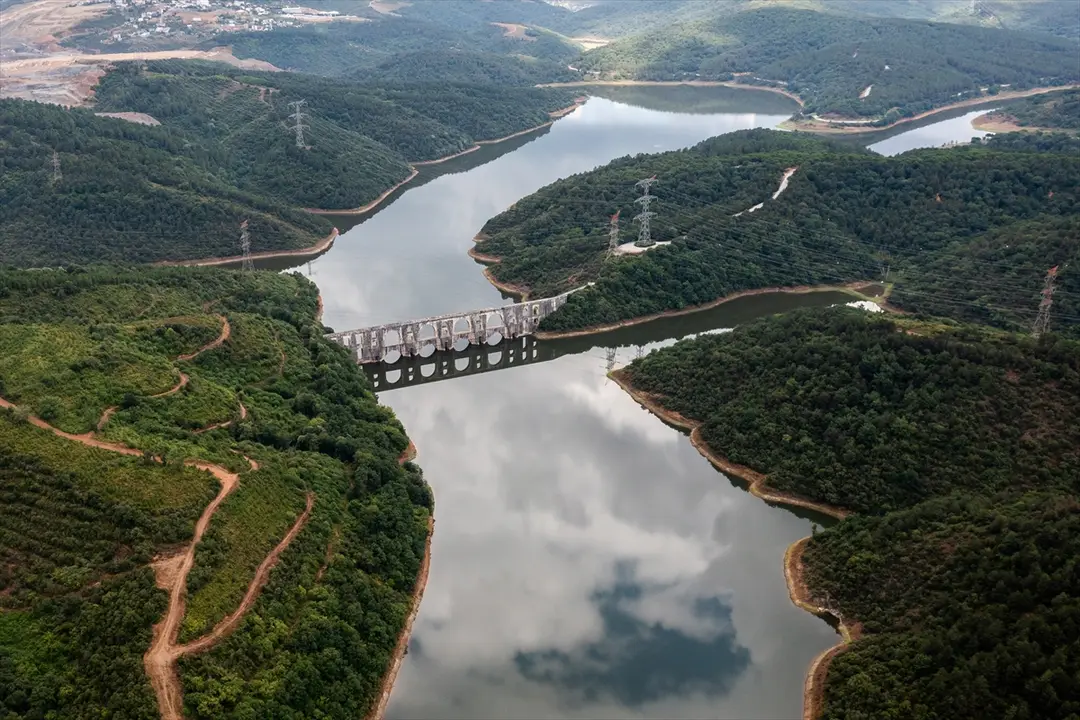
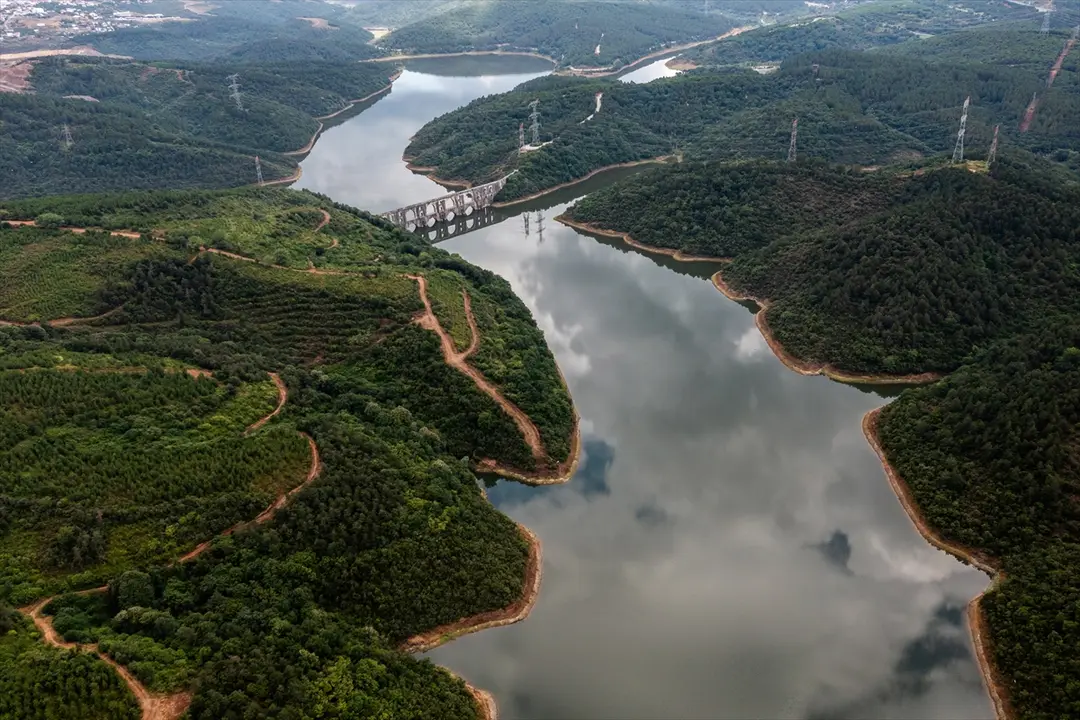
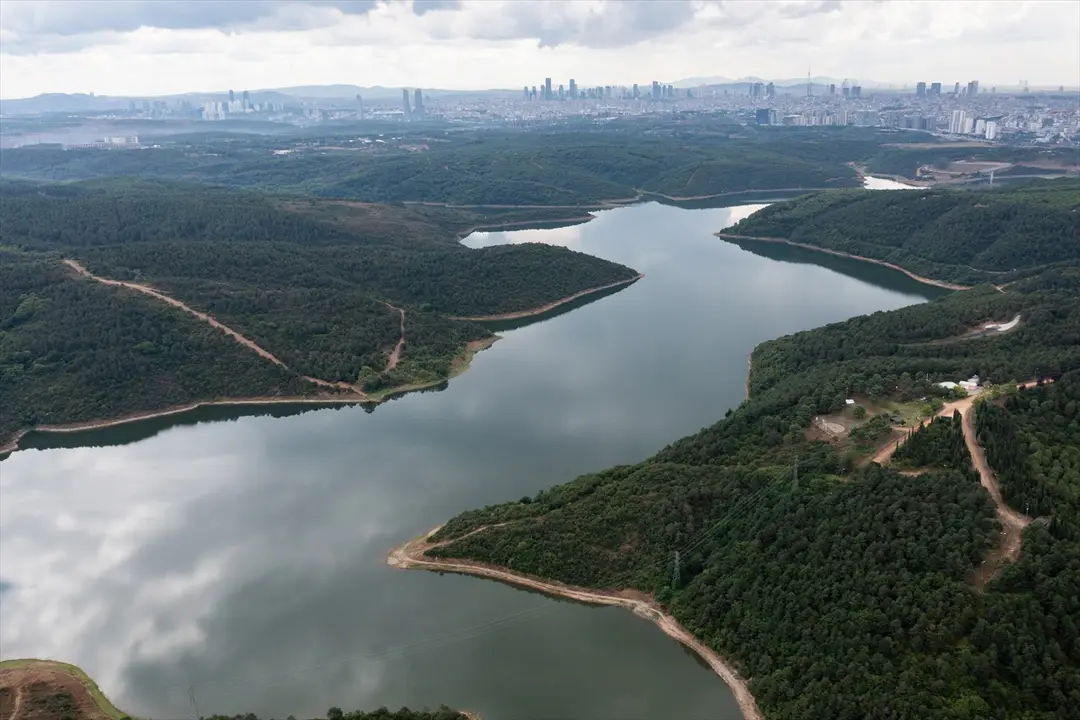
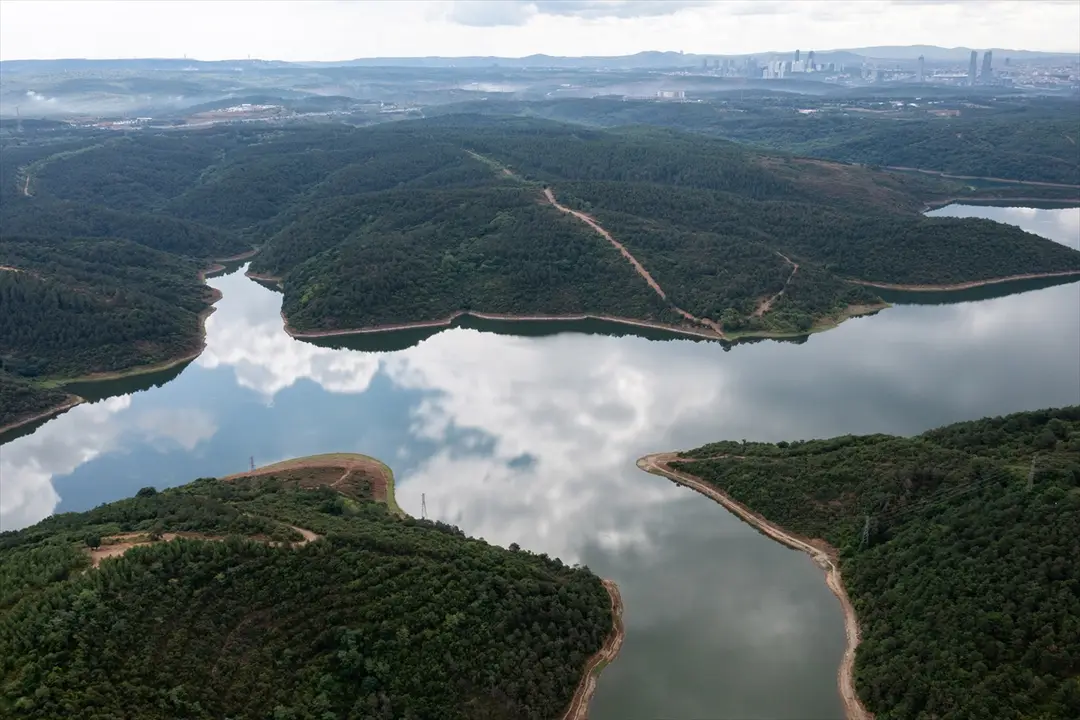
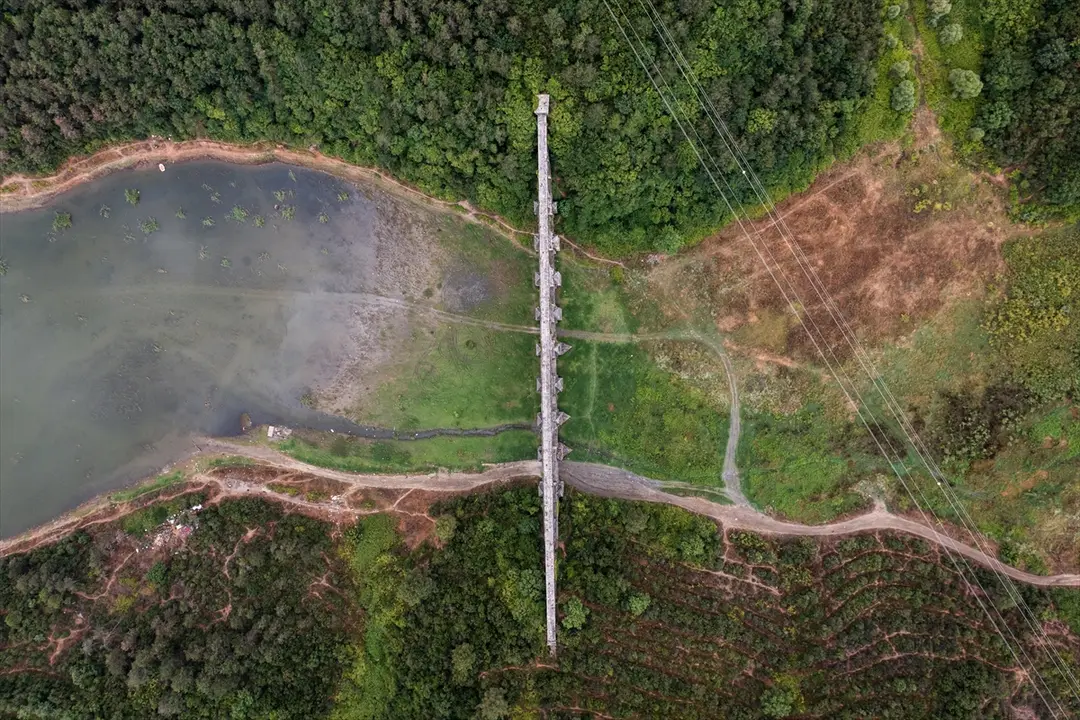
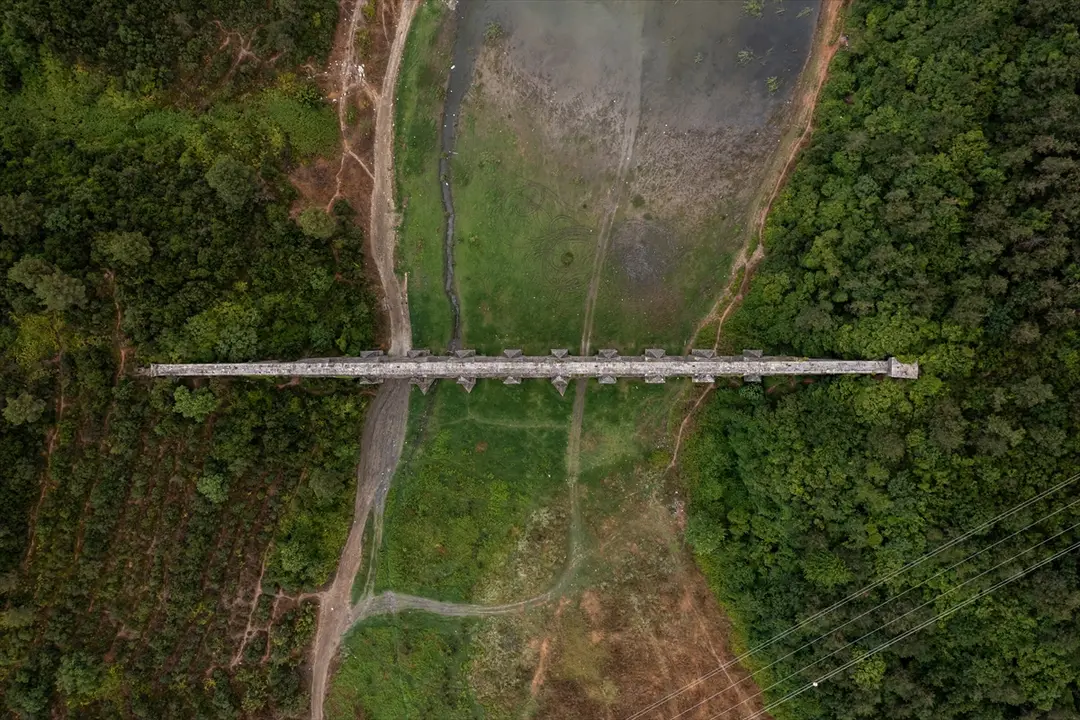
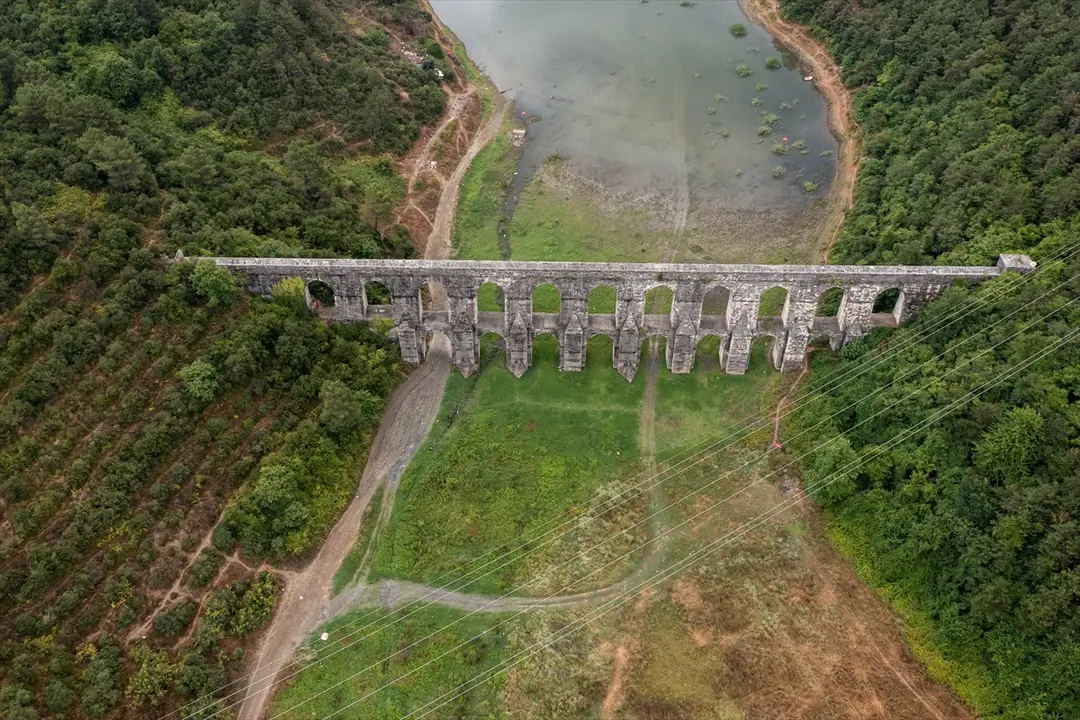
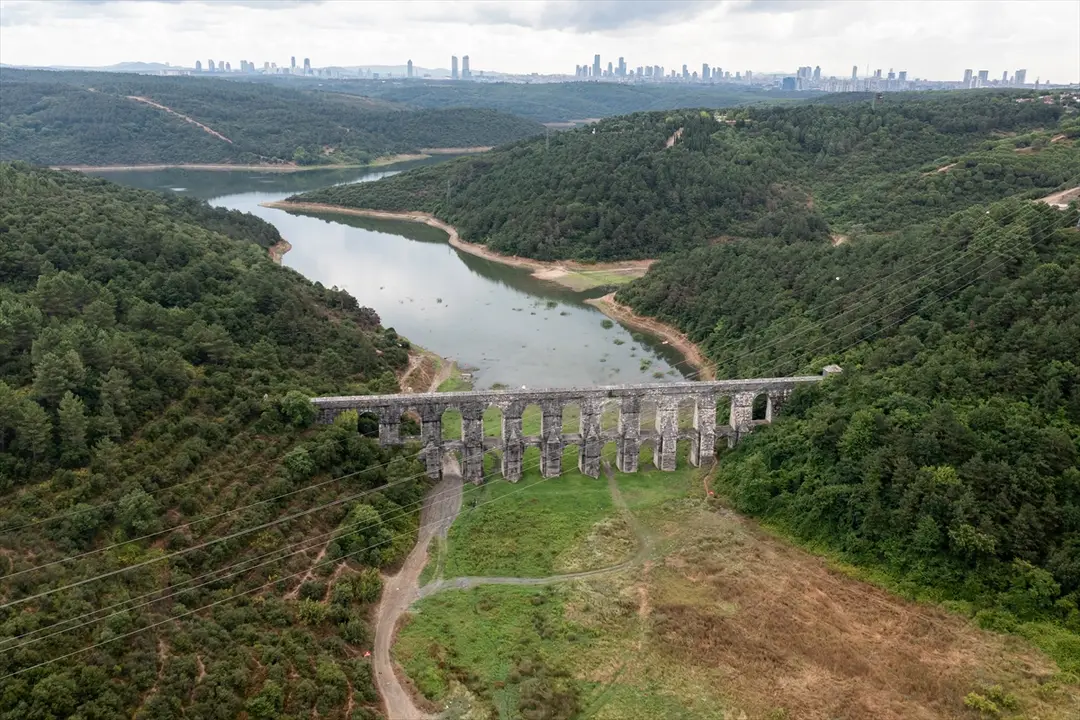
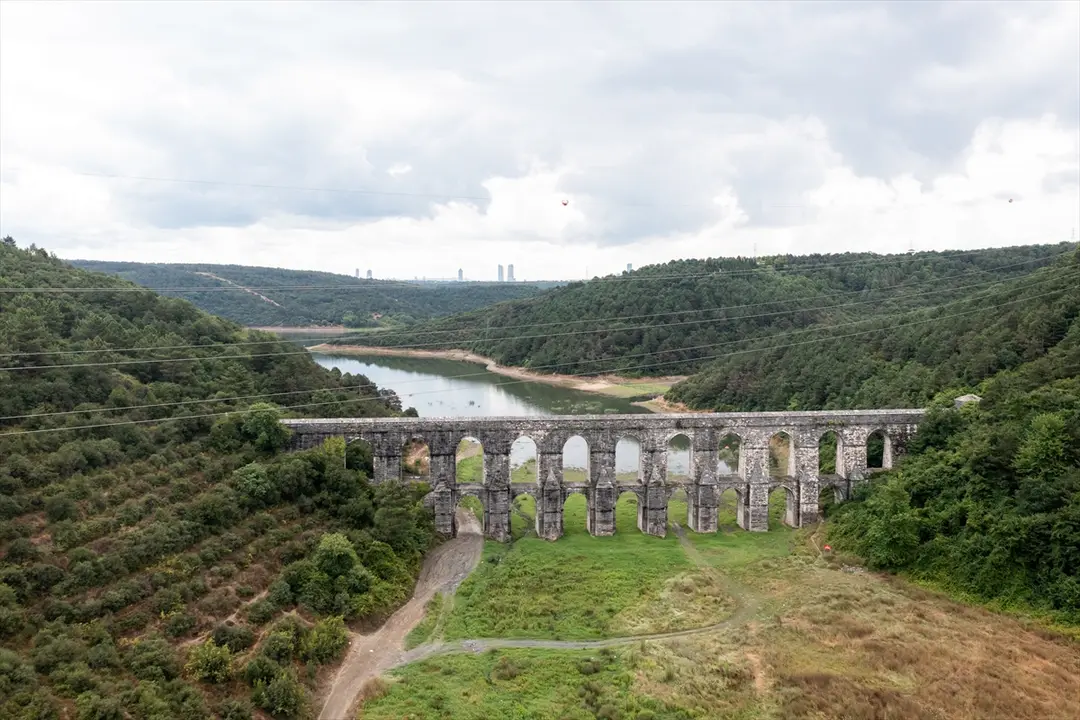
Dam occupancy rates supplying water to Istanbul have fallen to 56.63% due to decreased rainfall and increased water consumption in summer. Experts warned that there could be a risk of water shortage in autumn if rainfall remains insufficient.
Data from the Istanbul Water and Sewerage Administration (İSKİ) shows that water levels in dams continued to decline during the summer months due to reduced rainfall, hot weather, and increased water consumption.
The city's dams reached their highest occupancy level of the year at 72.05% on May 11. However, as of today, the occupancy rate has dropped to 56.63%.
The occupancy rates in the dams were measured as follows: Ömerli Dam 80.03%, Darlık 74.3%, Elmalı 86.39%, Terkos 47.08%, Alibey 54.71%, Büyükçekmece 40.49%, Sazlıdere 33.33%, Istrancalar 31.36%, Kazandere 31.61%, and Pabuçdere 27.21%.
The total storage volume of dams and ponds supplying water to the city is 868 million 683 thousand cubic meters. The current water amount is recorded as 491.46 million cubic meters as of today.
Outside of the dams, 462.52 million cubic meters of water were supplied to the city this year from Melen and Yeşilçay.
İSKİ statistics show the dam occupancy rates on April 24 by year as follows: 64.43% in 2016, 72.97% in 2017, 73.62% in 2018, 70.39% in 2019, 59.25% in 2020, 69.17% in 2021, 68.63% in 2022, 39.07% in 2023, 60.63% in 2024, and 56.24% in 2025.
Dr. Güven Özdemir, a faculty member and Meteorological Engineer at Istanbul Aydın University, stated that the dam occupancy rate this year is at a good average level. However, he noted that occupancy rates have decreased with the summer season.
Özdemir stated that the daily occupancy rate of Istanbul's dams is around 56%. "If no water enters the dams, and we don't get water from Melen and Yeşilçay, we have 154 days of water. This corresponds to almost 5 months," he said.
Özdemir reported that approximately 37,000 liters of water enter Istanbul per second. He noted that daily water consumption varies between 3.2 and 3.8 million cubic meters.
Özdemir pointed out that as temperatures rise in summer, water consumption also increases. "If no external water comes to Istanbul's dams, the amount of water in the dams will not be sufficient. Approximately 2.3 or 3 million cubic meters per day can be supplied from Melen and Yeşilçay. Only 0.8 million cubic meters of water can be supplied from Istanbul's dams," he stated.
Özdemir explained that drought, low rainfall, and strong winds in summer months increase evaporation, thereby reducing the amount of water in the dams.
Emphasizing that there seems to be no problem for the summer months at this stage, Özdemir stated that attention should be paid to the autumn months:
"There is no problem for summer, but starting from September, October, and November, as the amount of water in our dams decreases, there will be a water problem. Because we cannot use all of the 868 million cubic meters of water; there is a dead storage part. We can only use a certain amount of it. If it drops to the very bottom, we cannot use it. Even if Istanbul's current dam capacity were full, we would not have enough water for one year."
Highlighting the importance of water conservation, Özdemir stated that the recycling of used water should be ensured. He emphasized the importance of reusing water, especially in institutions, residences, and industrial facilities. He also stated that the collection of rainwater should be encouraged.
Prof. Dr. Hüseyin Toros, Head of the Climate Science and Meteorological Engineering Department at Istanbul Technical University (İTÜ) Faculty of Aeronautics and Astronautics, also made statements. Toros pointed out that rainfall decreased during the summer period as per seasonal norms, and with rising temperatures, both water consumption and evaporation increased.
Toros stated that dam occupancy rates should not be evaluated in isolation. He expressed that it would be more accurate to consider water resources in conjunction with meteorological conditions, population consumption habits, and water support provided from external basins.
Underlining that autumn rainfall will be crucial for the future of water resources, Toros said, "The amount and continuity of rainfall starting from September will determine the level of water reserves with which we enter the winter season. Therefore, the rainfall regime needs to be closely monitored in the coming months."
Stating that creating new water resources in cities is not enough, Toros emphasized that efficient water use is at least as important as supply:
"One of the main goals in water management is to reduce consumption while utilizing existing resources more efficiently. The widespread adoption of water-saving practices in homes, workplaces, and industry, the reuse of treated wastewater in appropriate areas, and the increase in systems for rainwater harvesting will reduce the risk of future water stress."
Prof. Dr. Toros noted that individual water conservation can yield significant results in metropolises like Istanbul. He added that avoiding unnecessary water consumption and using water consciously, especially during the summer months, will contribute to sustainable water management.











Comments
0 commentsNo comments on this article yet. Be the first!