
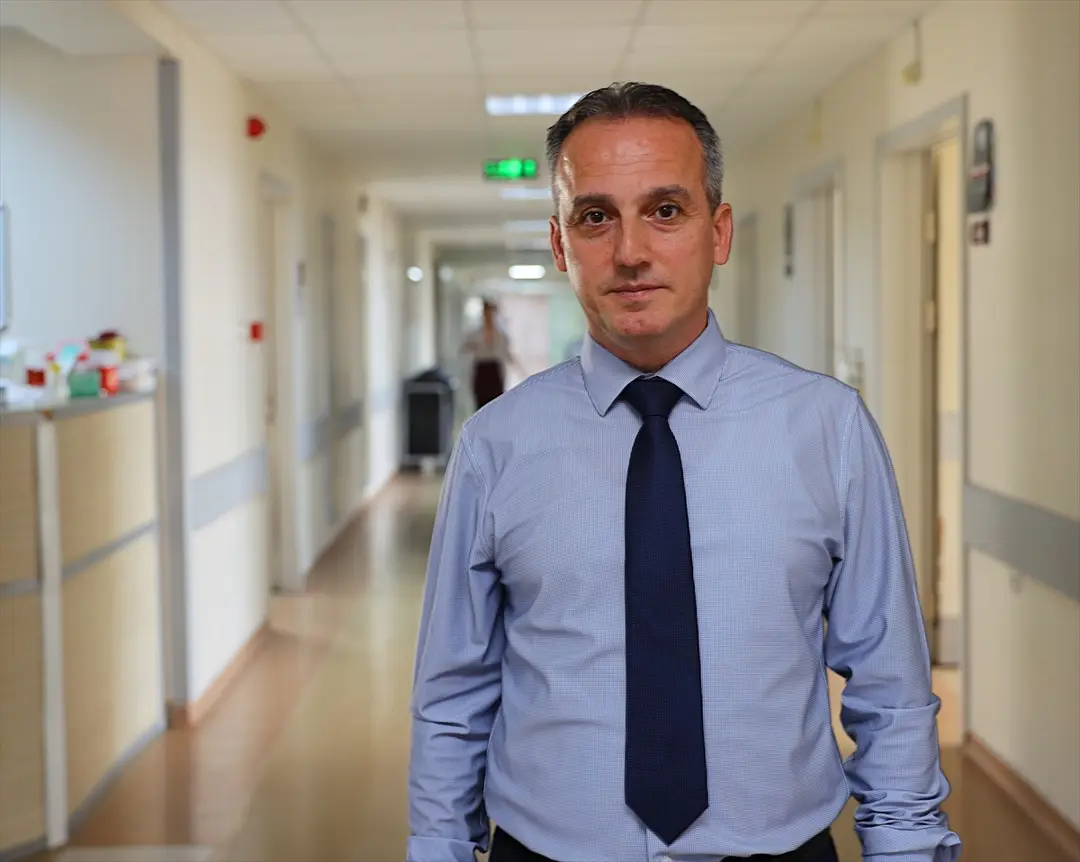
Prof. Dr. Murat Terzi, Head of the Department of Neurology at Ondokuz Mayıs University (OMU) Faculty of Medicine and President of the Turkish Neurological Society, emphasized that brain health is a lifelong process. Terzi said, "Brain health is not a condition that can be confined to just one day. With regular sleep, regular eating habits, and regular physical activities, we need to spread this not just to one day, but to every day. We also need to start this daily program from the womb, from infancy, so that we can create healthy futures with healthy brains."
Prof. Dr. Terzi made statements within the scope of July 22 "World Brain Day," declared by the World Federation of Neurology. He noted that they are carrying out awareness campaigns through neurology clinics across Turkey and the Turkish Neurological Society.
Terzi stated that there are many risk factors that negatively affect brain health, and said: "Chief among these are environmental pollution, electromagnetic fields, salt and cigarette consumption, obesity, and unhealthy eating habits. In addition, we have genetic risk factors. If there is a disease like Alzheimer's, MS, or Parkinson's inherited from the mother, father, or previous generations, this also increases the risk of neurological diseases."
Terzi emphasized that brain health begins in the womb. "The healthier our brains are, the better our future brains and our future will be. For this reason, we particularly emphasize environmental factors and daily life activities. We say, eat better. Adopt a Mediterranean-style diet; we prioritize salt-free, fat-free, vegetable and fruit-rich nutrition. Reducing salt consumption, staying away from elements that negatively affect brain health such as cigarettes and alcohol, especially less screen exposure during the day, and at least in enclosed environments, staying away from electromagnetic fields like Wi-Fi and phones while sleeping at home in the evening, are important for brain health. It is necessary to pay attention to these from the womb and continue to prioritize them after the baby is born," he stated.
Terzi, stating that physical activity is beneficial for brain health, added: "Walking and exercising at least 2-3 days a week, avoiding weight gain, and trying to stay away from obesity are very important. This is crucial for reducing risk factors such as cerebral vascular occlusions and brain hemorrhages. We have risk factors that need to be controlled, such as hypertension and diabetes. These are harmful for brain health. Therefore, if we have another disease apart from a neurological one, these also need to be controlled."
"Brain health is also essential for our other organs"
Terzi noted that with the increase in the elderly population, neurological diseases such as dementia, Alzheimer's, Parkinson's, and MS are seen more frequently, and stated: "Diseases seen more in the middle and advanced age groups, such as dementia, Alzheimer's, Parkinson's, and MS, cause both mental, cognitive, and physical disabilities. The more we can raise public awareness, the more we can bring our preventive treatments for brain health to the forefront. Once our brain becomes ill, it is necessary to protect the brain against those diseases. For this, we ensure that our patients manage their conditions associated with these neurological diseases in the best possible way by providing them with necessary medication, physical activities, physiotherapy programs, and diet recommendations."
Prof. Dr. Terzi emphasized that July 22 World Brain Day is important for awareness. He concluded his words as follows: "Brain health is not a condition that can be confined to just one day. With regular sleep, regular eating habits, and regular physical activities, we need to spread this not just to one day, but to every day. We also need to start this daily program from the womb, from infancy, so that we can create healthy futures with healthy brains. That's why we say we care about your brain health. Brain health is extremely important. Brain health is also essential for our other organs. Therefore, this is the most accurate message we can give to our patients. Let's take good care of our brains. If we feel any problems related to this, such as headaches, seizures, difficulty walking, or vision loss, neurology clinics should definitely be visited."





Comments
0 commentsNo comments on this article yet. Be the first!