
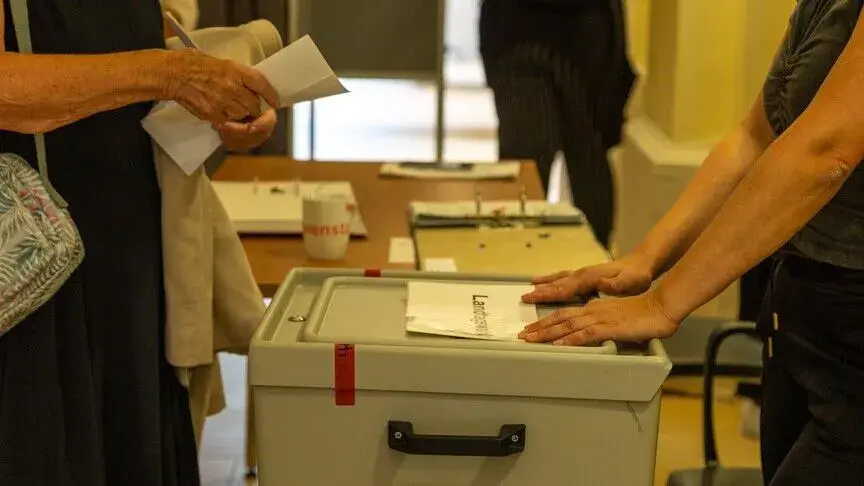
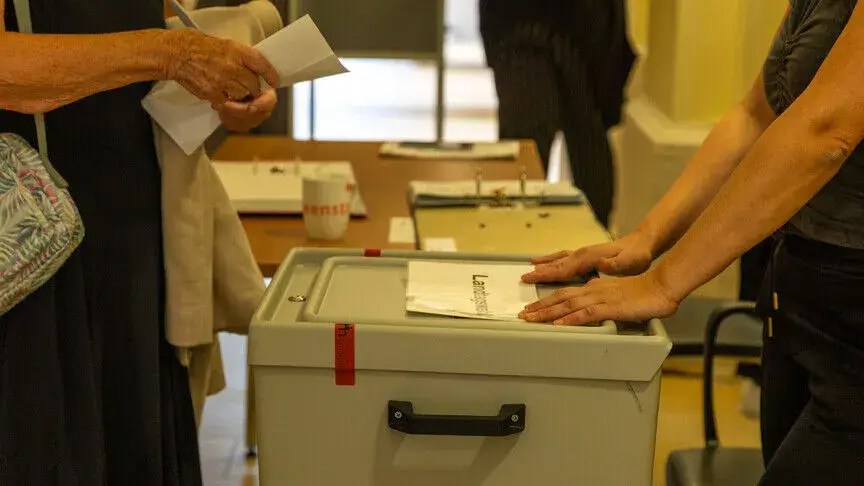
In the state where approximately 1.7 million voters cast their ballots, voting ended at 6:00 PM local time.
According to the State Election Commission, 97% of the ballot boxes were opened in the election.
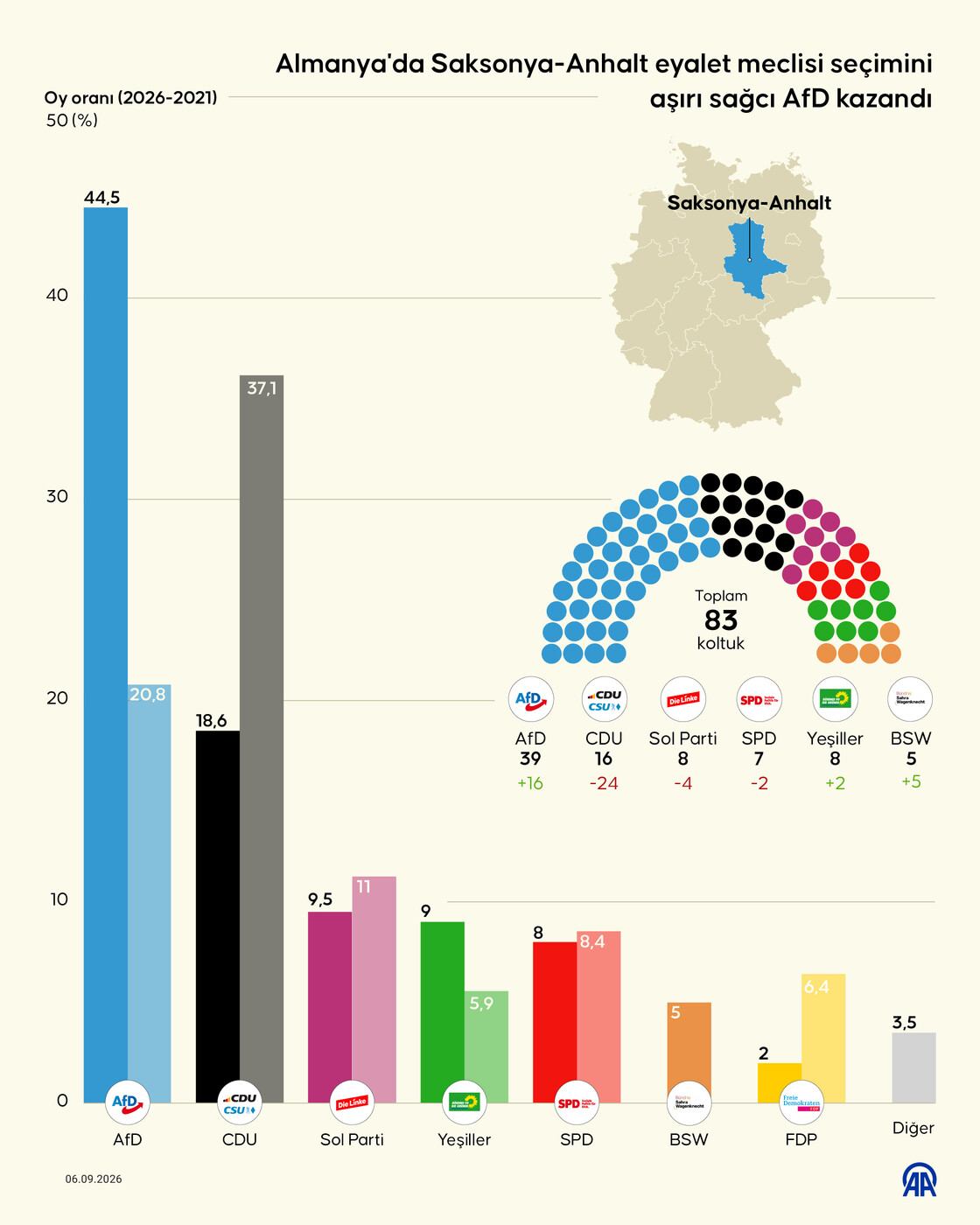
According to the unofficial results announced by German public broadcaster ZDF, the AfD received 44.4% of the votes.
The AfD thus increased its vote share by 23.6 percentage points compared to the 2021 election, achieving the highest vote share ever reached by any party in a state parliament election in Saxony-Anhalt.
The Christian Democratic Union (CDU), the senior partner in the federal government, lost 19.9 percentage points compared to 2021, coming in second with 17.2%.
The Social Democratic Party (SPD) came in third with 9.1%, the Greens fourth with 8.9%, and the Left Party fifth with 8.6%.
The Alliance for Social Justice and Economic Understanding (BSW), participating in the Saxony-Anhalt state elections for the first time, is expected to enter the parliament by exceeding the election threshold with 5.2% of the votes.
The Free Democratic Party (FDP), on the other hand, failed to pass the 5% election threshold with 2.5% of the votes.
Voter turnout is estimated to be 76.9%. This rate was recorded as 60.3% in 2021.
AfD fails to secure absolute majority
According to ZDF's seat distribution projection, the AfD is expected to be represented by 39 deputies in the 83-seat state parliament.
The CDU is projected to win 15 seats, the SPD, Greens, and Left Party 8 each, and the BSW 5 deputies.
An absolute majority in the state parliament requires 42 deputies. Accordingly, the AfD fell 3 seats short of the majority needed to form a government alone.
Thomas Schulze, one of BSW's lead candidates, signaled a possible alliance in his post-election statement, saying, "We said we would talk to all parties. This includes the AfD."
For a majority government to be formed without the AfD, the CDU, SPD, Greens, Left Party, and BSW would all need to join a coalition.
Sven Schulze, the CDU's candidate for prime minister and current State Premier, announced that he would not cooperate with the AfD.
AfD's prime ministerial candidate Ulrich Siegmund stated that his party was not keen on forming a minority government but was ready to negotiate if support came from other parties or deputies.
Siegmund, also evaluating the possibility of failing to form a government, argued that new elections could be held in that case, saying, "Then we would get 50 or 55 percent."
AfD leads in all age groups
According to a survey conducted by Infratest dimap for ARD on election day, the AfD was tied with the CDU at 31% among those aged 70 and over, while it ranked first alone in all other age groups.
The AfD received 42% of the votes in the 18-24 age group and 44% in the 25-34 age group.
The party's vote share rose to 53% in the 35-44 and 45-59 age groups, while it was measured at 47% in the 60-69 age group.
AfD's prime ministerial candidate Ulrich Siegmund
AfD's Saxony-Anhalt prime ministerial candidate Ulrich Siegmund said, "We achieved exactly what we wanted to achieve. We made history in this state," while party co-leader Alice Weidel used the expression, "This is a historic result and a very clear mandate to form a government."
Born in 1990, Siegmund studied business psychology and business administration. An entrepreneur in marketing, Siegmund has been a member of the Saxony-Anhalt State Parliament since 2016 and serves as one of the leaders of the AfD's state parliamentary group.
The official statement from the Saxony-Anhalt State Parliament noted that a plan envisioning the deportation of millions of people of immigrant origin from Germany was discussed at the meeting in question.
Siegmund attended a meeting held in Potsdam in November 2023, where views on the deportation of immigrants from Germany were discussed. The Saxony-Anhalt State Parliament announced in February 2024 that Siegmund had been removed from his position as Chairman of the Committee on Labor, Social Affairs, Health, and Equality following his participation in this meeting.
Addressing his supporters after the election results, Siegmund used the phrase, "We made history in this country," and argued that the result in Saxony-Anhalt was the beginning of a political change across Germany.
AfD Co-leader Tino Chrupalla also pointed to 2029, stating, "2029 will be the decisive election year at the latest. By then, we will have completed the second transformation in this country, and then we will govern Germany."
Anti-AfD protests
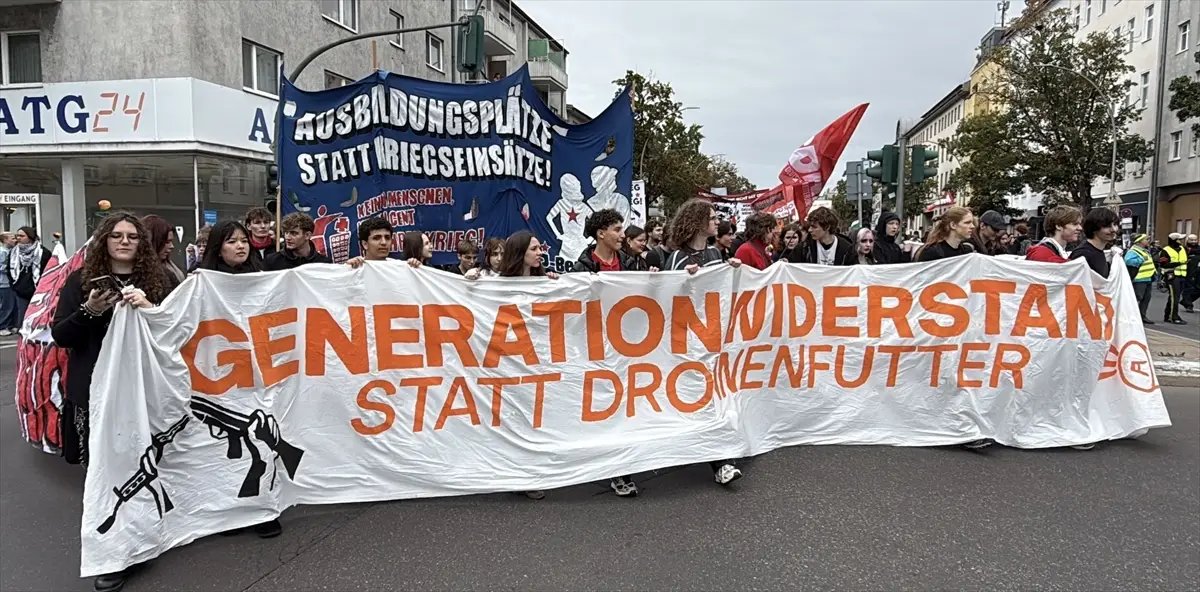
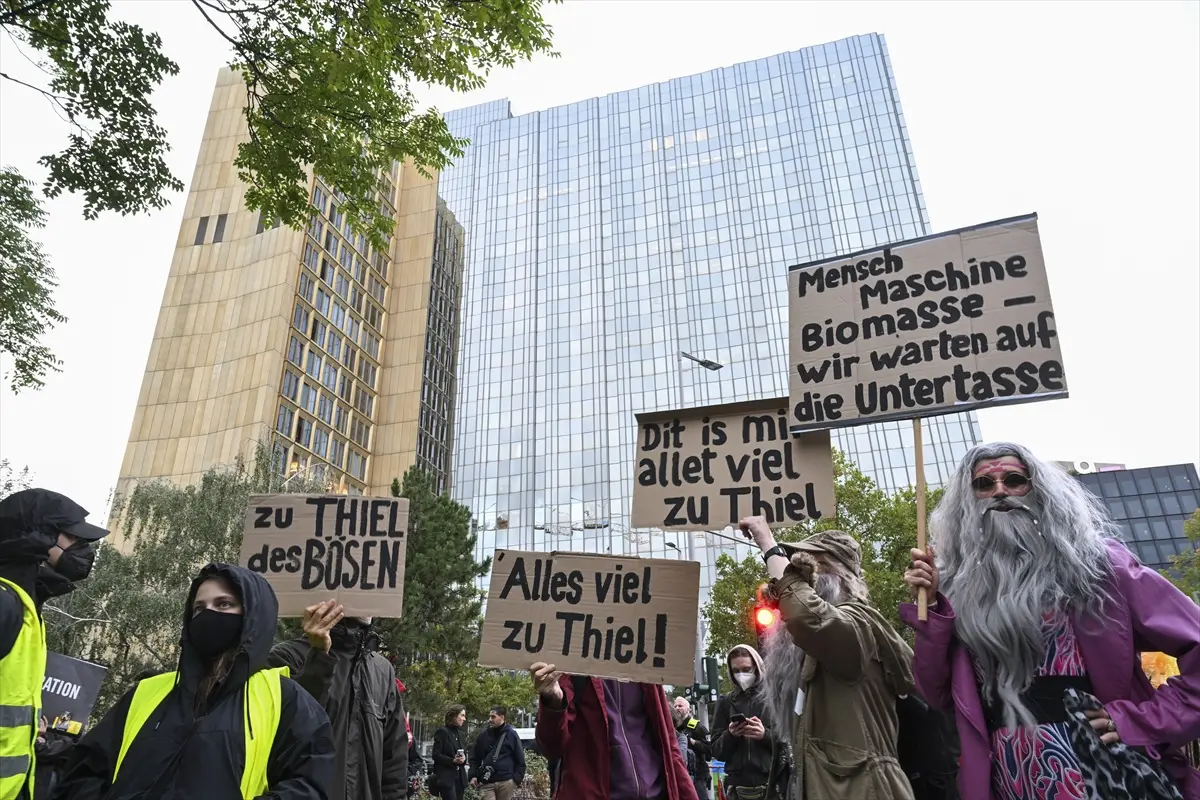
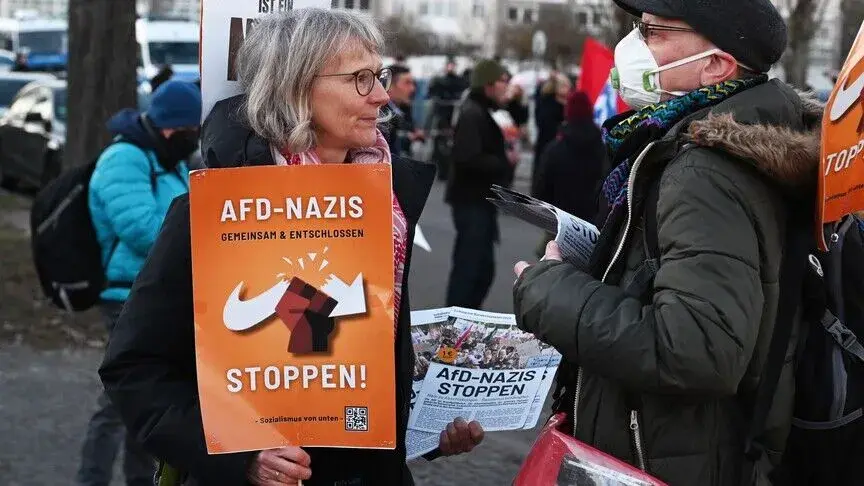
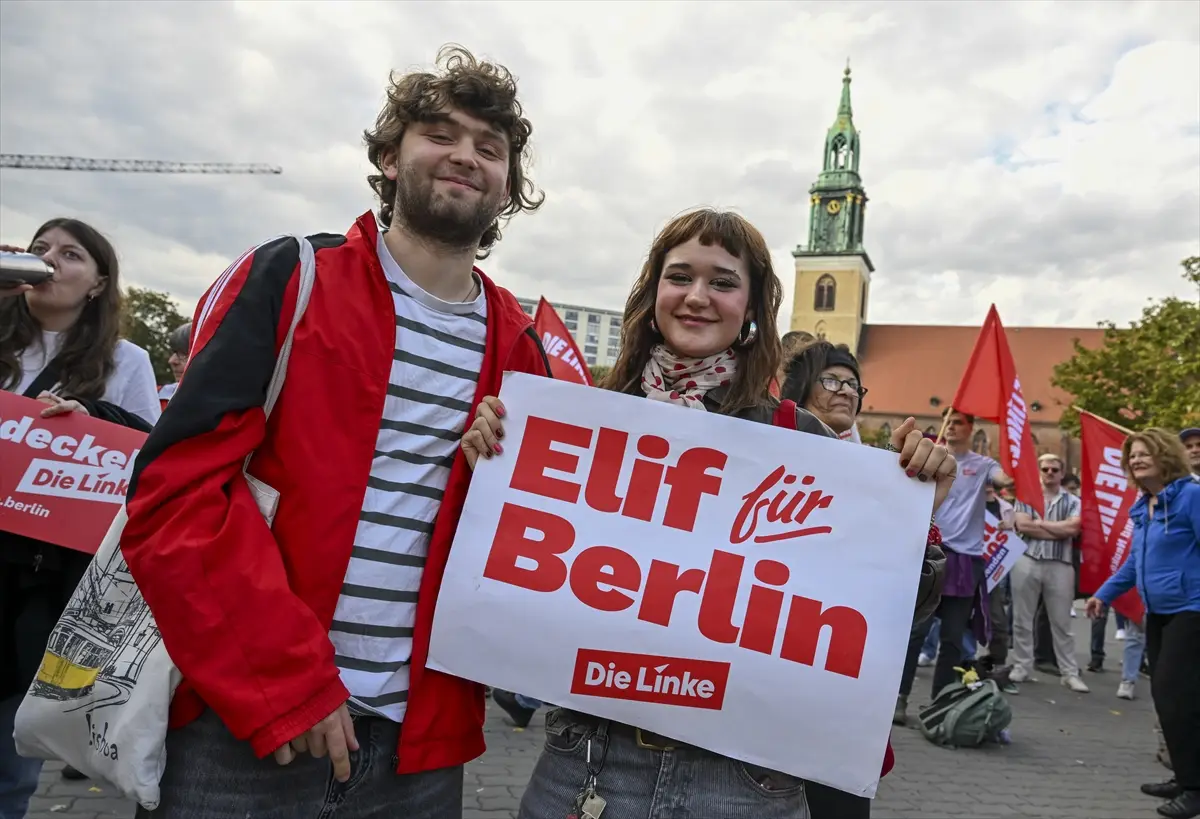
Following the election, demonstrations against the AfD were held in various cities across Germany.
According to a police statement, approximately 2,500 people in Frankfurt demanded an investigation into the possibility of initiating a ban process against the AfD.
In Berlin, hundreds of demonstrators marched from the government district to the Saxony-Anhalt State Representation. An anti-AfD demonstration was also held in Mainz.
A larger demonstration is planned for Monday at 6:00 PM local time in front of the Brandenburg Gate in Berlin.
The Saxony-Anhalt State Election Commission continues to count votes. Provisional official results are expected to be announced late at night or on the morning of September 7.
Germany's election calendar will continue on September 20 with elections in the states of Berlin and Mecklenburg-Vorpommern. Members of the House of Representatives and district councils will be determined in Berlin, and members of the state parliament in Mecklenburg-Vorpommern.
AfD's victory in German state election reverberates globally
The far-right Alternative for Germany (AfD) coming in first in the Saxony-Anhalt State Parliament election, according to exit polls, was reported as breaking news in the world press.
According to exit polls, the AfD came in first with 44.5% of the votes in the elections where 1.7 million voters cast their ballots.
The world press presented this development as breaking news.
USA
A post on the social media account of US-based Bloomberg stated that "the AfD won as public discontent continues to grow."
In a post related to the news titled "Germany's far-right AfD party set to win state elections but will fall short of majority," it was assessed that the AfD "is not expected to secure an absolute majority to form a government."
CNN's report commented, "Germany's far-right AfD party is projected to win the eastern state elections, according to exit polls, but it is uncertain whether the results will be enough for them to come to power."
The New York Times also reported that the AfD was projected to win the election, but it was uncertain whether they would secure a majority.
The Wall Street Journal's report also stated that if the AfD won the election, it would be considered a "historic victory."
United Kingdom
A post on the BBC's social media account highlighted that the AfD was projected to win the elections with at least 44% of the votes. The channel's report interpreted the election results as a "major victory" for the AfD.
The Financial Times also brought the AfD's first-place finish in the election to the agenda with the headline "Far-right AfD ahead in German state elections, according to exit polls."
A post on Sky News' social media account regarding the elections reported that the AfD was expected to win the election with 44.5% of the votes.
A post on The Telegraph's account described the AfD's election victory as a "major triumph."
The post stated that the AfD "came close to securing an absolute majority and was expected to win 39 seats instead of 42 in the State Parliament."
The news headline, meanwhile, stated the view that "Anti-immigrant AfD set for landslide election victory in eastern Germany."
France
A post on the social media account of the French AFP agency described the AfD's first-place finish in the election as an "overwhelming victory."
Germany
A post on the Turkish social media account of Germany's public international broadcaster Deutsche Welle (DW) included exit poll data.
Qatar
A social media post by Qatar's Al Jazeera television highlighted that the AfD's victory was "the first election won by a far-right party in state elections since World War II."
Poland
Polish Prime Minister Donald Tusk reacted to the AfD's election victory in a post on the social media account of the US-based company X.
Tusk used the expressions in his post, "Only fools or traitors in Poland can rejoice at the AfD's victory in Germany. There are quite a few of them in Konfederacja and PiS (opposition parties in Poland)."
Italy
Matteo Salvini, leader of the far-right League Party, a junior partner in Italy's ruling right-wing coalition, and Italy's Deputy Prime Minister and Minister of Infrastructure and Transport, was one of the first to congratulate the AfD on its election victory.
Salvini used the expressions in his X post, "I congratulate my friend Alice Weidel and the entire AfD on their victory in Saxony-Anhalt. A sensational success that highlights a strong demand for change, security, and job opportunities."
Salvini stated that the AfD's election victory was also a response to leftists who fueled fear and disaster scenarios, commenting, "Fear? Terror? Danger? No, this is called democracy. Another Europe is possible."
Hungary
Hungary's former Prime Minister Viktor Orbán also included the expressions in his congratulatory post on X, "A great night for Germany and Europe! Congratulations to the AfD on their overwhelming victory in Saxony-Anhalt! Get ready. This is just the beginning!"
Netherlands
Geert Wilders, leader of the far-right Party for Freedom (PVV) in the Netherlands, also posted on X, congratulating the AfD on its election victory.
France
Jean-Luc Mélenchon, presidential candidate for France's left-wing La France Insoumise (LFI) Party, stated in his X post, "The far-right is back in Germany. (This situation is) a catastrophic indicator of the blindness of centrist European politicians. This disaster is their legacy."
Mélenchon stated that, under these circumstances, Germany's military project to build Europe's largest conventional army was unacceptable for France.
Fabien Roussel, presidential candidate for the French Communist Party (PCF), commented on his account on the same platform, "The AfD is making progress again in Germany."
Roussel pointed out that the far-right continues to gain strength with its agenda of hate across Europe, arguing that far-right parties draw strength from rising poverty and war.
Roussel stated that this situation was an "extremely terrible outcome" for the European Union (EU) and its agreements, adding, "It's time to change them."
Nicolas Dupont-Aignan, presidential candidate for the right-wing "Stand Up France" Party, stated in a social media post that the AfD's election results were "good news for peace" and constituted "a major blow against EU Commission President Ursula von der Leyen."
Dupont-Aignan argued that the AfD rejected the EU leaders' dragging the continent towards war.
Gabriel Attal, former Prime Minister of France and presidential candidate for the center-right Renaissance Party, stated on French channel BFMTV that the election results in Germany were "a real warning sign."
Attal called for the necessary lessons to be learned from this situation for France's presidential elections next year.
Marko Mihkelson, Chairman of the Estonian Parliament's Foreign Affairs Committee, also used the expressions in his X post, "The AfD will be a tool for those who seek to destroy European unity and weaken our common defense."
In Germany's Saxony-Anhalt State Parliament election, the far-right AfD had come in first with 44.5% of the votes, according to exit polls.



Comments
0 commentsNo comments on this article yet. Be the first!