
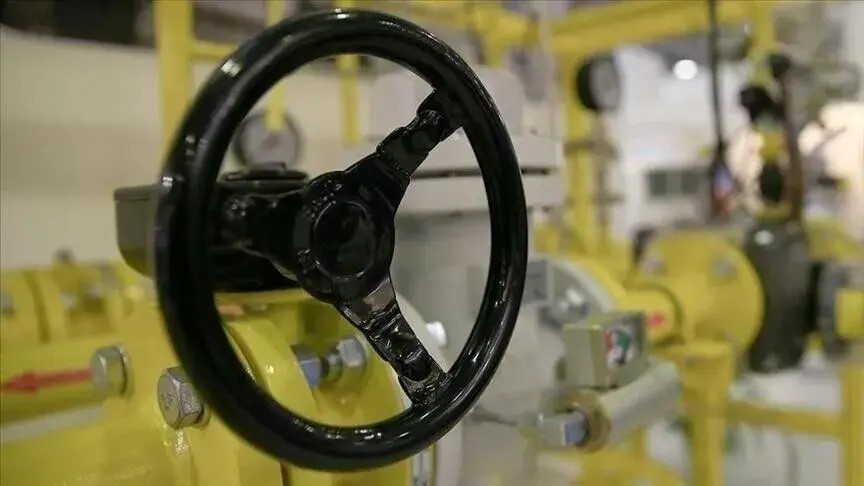
The country's natural gas storage facilities are currently at 50% capacity. While a legal target of 80% capacity must be reached by November 1, even the 71% target calculated due to exemptions is being described as "almost impossible" by the German Gas Transmission System Operators Association.
The German Ministry for Economic Affairs and Climate Action is pursuing a policy that relies solely on market dynamics. This situation has intensified discussions and criticisms regarding supply security in the country.
Experts, industry representatives, and the opposition argue that current measures are insufficient to guarantee natural gas supply during the winter months. In response to increasing pressure, the Ministry for Economic Affairs and Climate Action has signaled a policy shift.
A statement from the Ministry announced that action options that can be implemented quickly and effectively in case of a worsening situation are being prepared.
The statement noted that storage levels, LNG availability, infrastructure, and the situation in neighboring countries are being continuously analyzed, but no concrete details were provided regarding potential market interventions.
The blockade of the Strait of Hormuz due to the war in the Middle East is disrupting global oil and natural gas shipments, driving up prices.
Companies aiming to purchase and store gas at low prices during the summer months are avoiding purchases due to high costs. This situation recalls the crisis in 2022, when storage facilities were filled after the Russia-Ukraine War by spending billions of euros in public funds.
Alice Weidel, co-leader of the far-right Alternative for Germany (AfD) party, the main opposition, sharply criticized the government, stating, "The facilities are half empty; the level has never been this low. The government is jeopardizing supply security with its misguided policies."
Michael Kellner, energy policy spokesperson for the opposition Green Party, criticized the government, stating that market mechanisms have collapsed with the closure of the Strait of Hormuz.
Kellner warned, "There are no signs that storage facilities will fill up quickly. To avoid supply disruptions in winter, we might have to import gas at much higher prices."
Tobias Paulun, CEO of the European Energy Exchange, also emphasized that storage facilities would not fill without additional measures, stating, "If natural gas is more expensive in summer than in winter, you cannot fill storage facilities with market dynamics. Political will needs to step in and create a complementary mechanism."



Comments
0 commentsNo comments on this article yet. Be the first!