
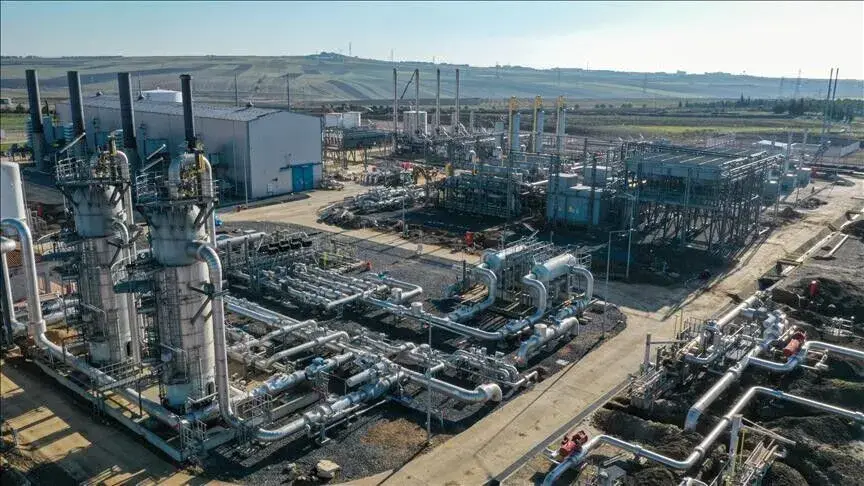
According to the latest gas scenarios report published in Berlin by the German Gas Storage Initiative (INES), the country's storage facilities entered September with a 53 percent fill level.
This rate, recorded as the lowest September figure in the last 15 years, was at 71 percent during the same period last year.
According to the INES report, it is technically possible to reach a 77 percent fill level by November 1, 2026. However, this requires storing more gas in the next two months than was stored in the previous three months combined.
Strait of Hormuz Crisis Made Storage Costly
Sebastian Heinermann, Managing Director of INES, stated that market players' appetite for gas storage has decreased. Heinermann said, "Reserving capacities in facilities alone is not enough. High gas prices triggered by the closure of the Strait of Hormuz and the negative summer-winter price spread have made storage economically unattractive for market participants."
Heinermann called for an urgent package of measures, including reducing storage costs.
INES analyses show that a 77 percent fill level by November 1 would ensure supply security under normal winter temperatures. However, this level might be insufficient during freezing cold spells.
In the event of extreme cold waves, gas supply shortfalls exceeding 25 percent could occur, especially in January.
"Supply Security" Traffic Between Government and Energy Companies
The German Ministry for Economic Affairs and Energy, however, argues that supply security concerns are unfounded.
The Ministry stated that there is no need for government intervention at the current stage, citing uninterrupted pipeline deliveries from Norway and newly commissioned liquefied natural gas (LNG) terminals.
According to reports in German and international media, the government is discussing financial support scenarios with nationalized companies Uniper and Sefe Energy to fill gas storage facilities.
Statements from Sefe and Uniper confirmed that close contact is being maintained with the Ministry of Economic Affairs to ensure supply security and fulfill commitments.






Comments
0 commentsNo comments on this article yet. Be the first!