
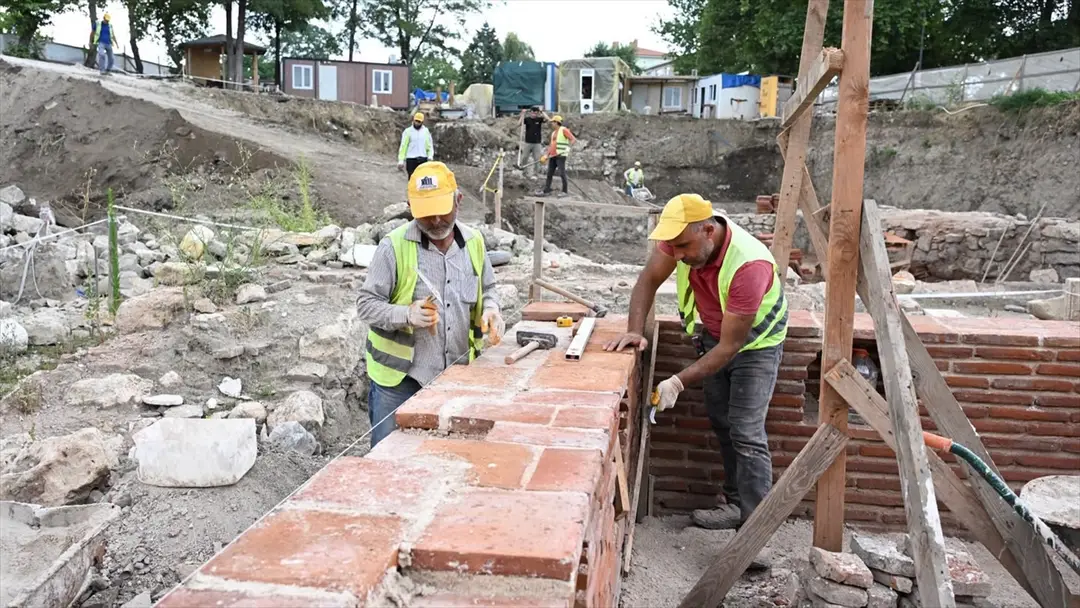
Restoration works at the 6-century-old Gazi Mihal Bathhouse, one of the important examples of early Ottoman architecture in Edirne, are nearing completion.
Within the scope of revitalization works initiated two years ago under the instruction of Governor Yunus Sezer, the surroundings of the historical structure were cleaned. The sections of the bathhouse that remained underground, located on the road to the Kapıkule Border Gate, were brought to light.
Restoration works on the bathhouse's exterior facade, roof, and interior spaces were carried out simultaneously.
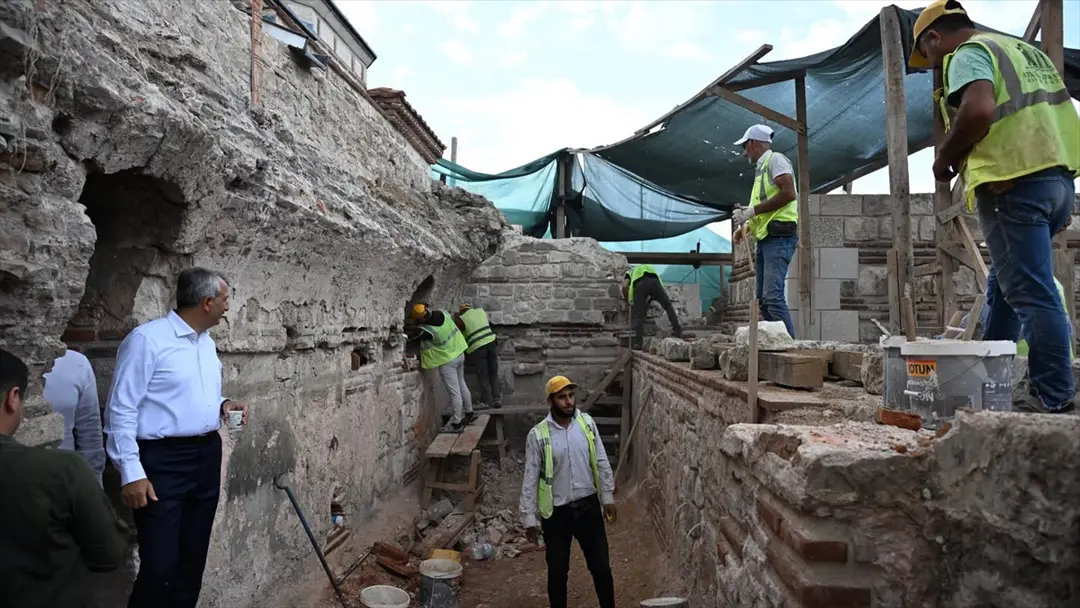
Governor Sezer conducted inspections at the Gazi Mihal Bathhouse and received information from officials.
Governor Sezer stated that the bathhouse, restored in accordance with its original form, will be integrated into the city's cultural and social life. He also stated that the historical structure will begin serving again in a short time.
During his inspections, Governor Sezer was accompanied by Deputy Governor and Provincial Special Administration Secretary General Eyyüp Batuhan Ciğerci and Edirne Regional Director of Foundations Ahmet Saraç.
Gazi Mihal Bathhouse
The bathhouse on the banks of the Tunca River was built in 1422 by Gazi Mihal Bey from the Mihaloğulları family of raiders, who provided important services during the founding period of the Ottoman Empire.
The walls of the bathhouse, constructed from cut stone and brick, preserve their originality.
The bathhouse, which formed a complex (külliye) with the Gazi Mihal Bey Mosque and İmaret Bridge, was completely closed after the Russian occupation of Edirne in 1829.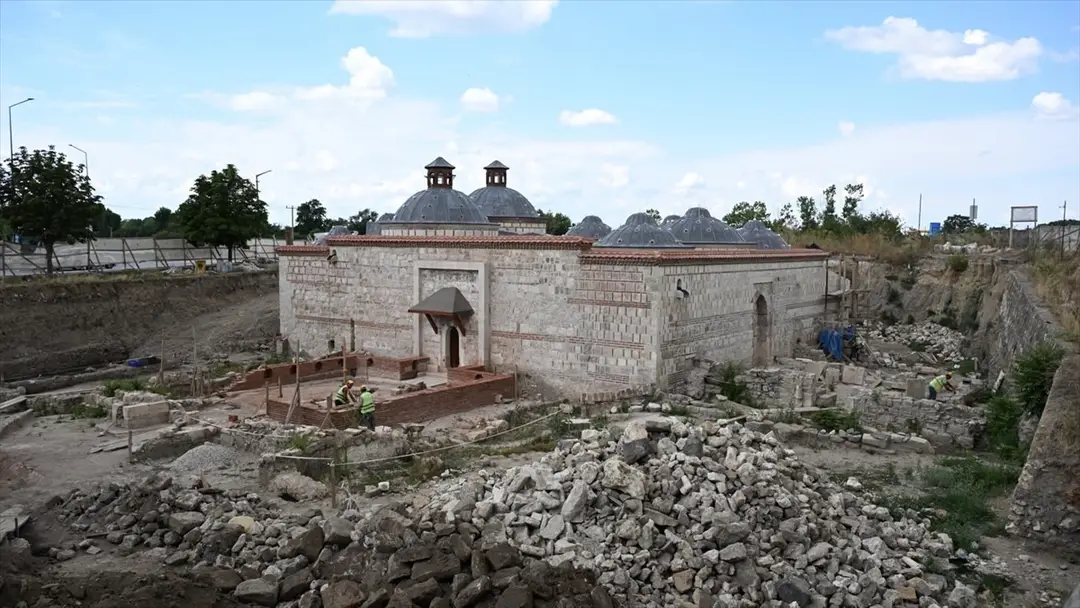


Comments
0 commentsNo comments on this article yet. Be the first!