
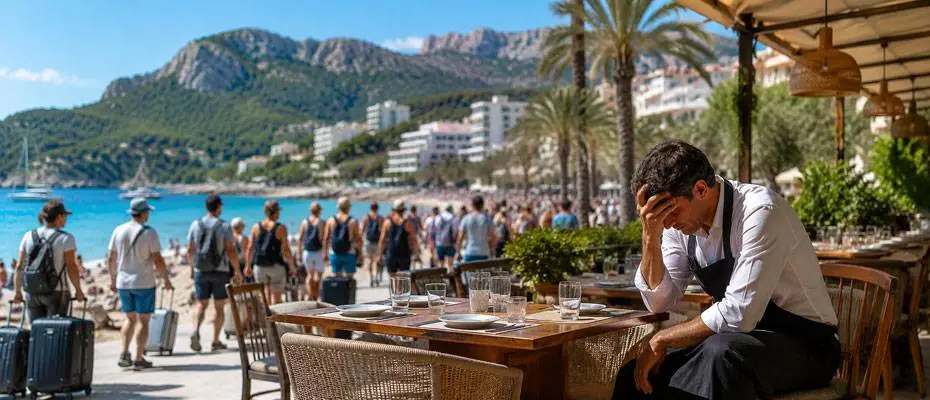
Despite an increase in tourist numbers in Mallorca, restaurant revenues are falling. CAEB Restauración Mallorca expects the island's restaurant sector's August revenues to decline by 12 to 14 percent compared to the same period last year. The overall annual decline is estimated to be between 6 and 8 percent.
Juan Miguel Ferrer, President of CAEB Restauración Mallorca, stated that this situation brings to the forefront the current state of the sector and Mallorca's future tourism model. Ferrer pointed out that the increase in visitor numbers does not boost consumption in the destination. He noted that an increasingly larger portion of tourists' budgets is spent before even arriving on the island.
Tourist Budgets Go Towards Flights and Accommodation
In an interview with Última Hora, Ferrer stated, "Despite hosting more tourists, we are generating less revenue, and this should set off all alarm bells."
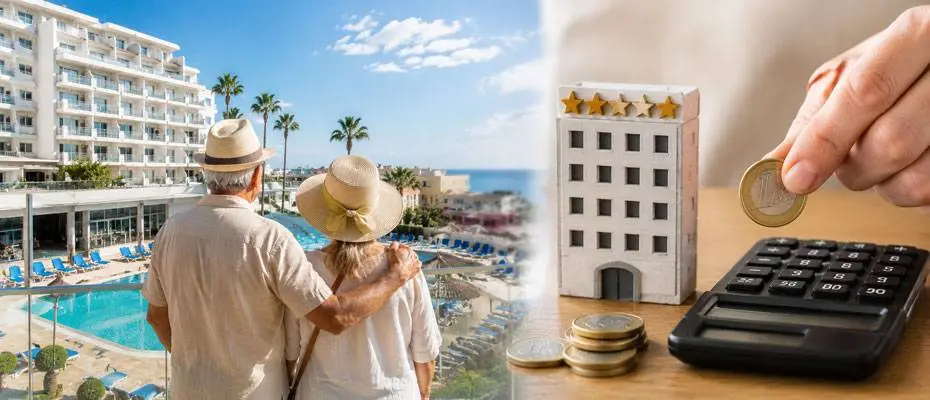
According to Ferrer, a significant reason for this development is the rise in flight ticket and accommodation prices. While tourists previously spent 30-40 percent of their holiday budgets on transportation and accommodation, this rate can now reach up to 70 percent.
Thus, by the time visitors arrive in Mallorca, they have already spent a significant portion of their budgets. The money available for restaurants, shopping, culture, and other local services consequently decreases.
Restaurant Costs Are Also Rising
The pressure on the sector does not only stem from tourists' changing spending habits. Ferrer emphasized that increases in personnel expenses, raw materials, energy, and rents have significantly raised businesses' costs.
This situation makes it difficult for restaurants to maintain competitive prices. According to Ferrer's example, a traditional daily menu offered for 17 euros a few years ago would need to be sold for approximately 30-35 euros today to maintain the same level of profitability. However, such a price point can negatively impact customers' decision to dine at a restaurant.
Target: Not More Tourists, But Higher-Spending Tourists
Ferrer, arguing that the emerging data necessitates a broader discussion on Mallorca's long-term tourism policy, opposed measuring success solely by visitor numbers.
He stated that instead of attracting more tourists, the island should focus on visitors who spend more in the destination. Ferrer cited the transformation of Playa de Palma towards a higher-quality tourism product as an example.
"I don't necessarily want more customers; I prefer fewer but better customers," said Ferrer, emphasizing that it should be considered how much of the tourism revenue truly remains in the local economy.
Tourism Debate Extends to Housing and Transportation
Developments in the restaurant sector align with similar problems observed in retail trade in Mallorca. Despite strong tourist activity, some retail businesses on the island had reported sales losses of up to 15 percent.
According to Ferrer, this situation indicates that tourism policy cannot be limited to restaurants and hotels. He stated that a long-term approach covering the next 20 or 30 years needs to be developed by considering transportation, housing, and economic activities together.
Ferrer also drew attention to the increasing difficulty of generational change in the restaurant sector, warning that the absence of a new generation to take over businesses in many establishments could increase the influence of foreign investors in the sector.
Mallorca's August data once again reveals that the increase in tourist numbers and the economic performance of local businesses do not always move in the same direction.







Comments
0 commentsNo comments on this article yet. Be the first!